
Your workforce skills, mapped automatically, without a survey.
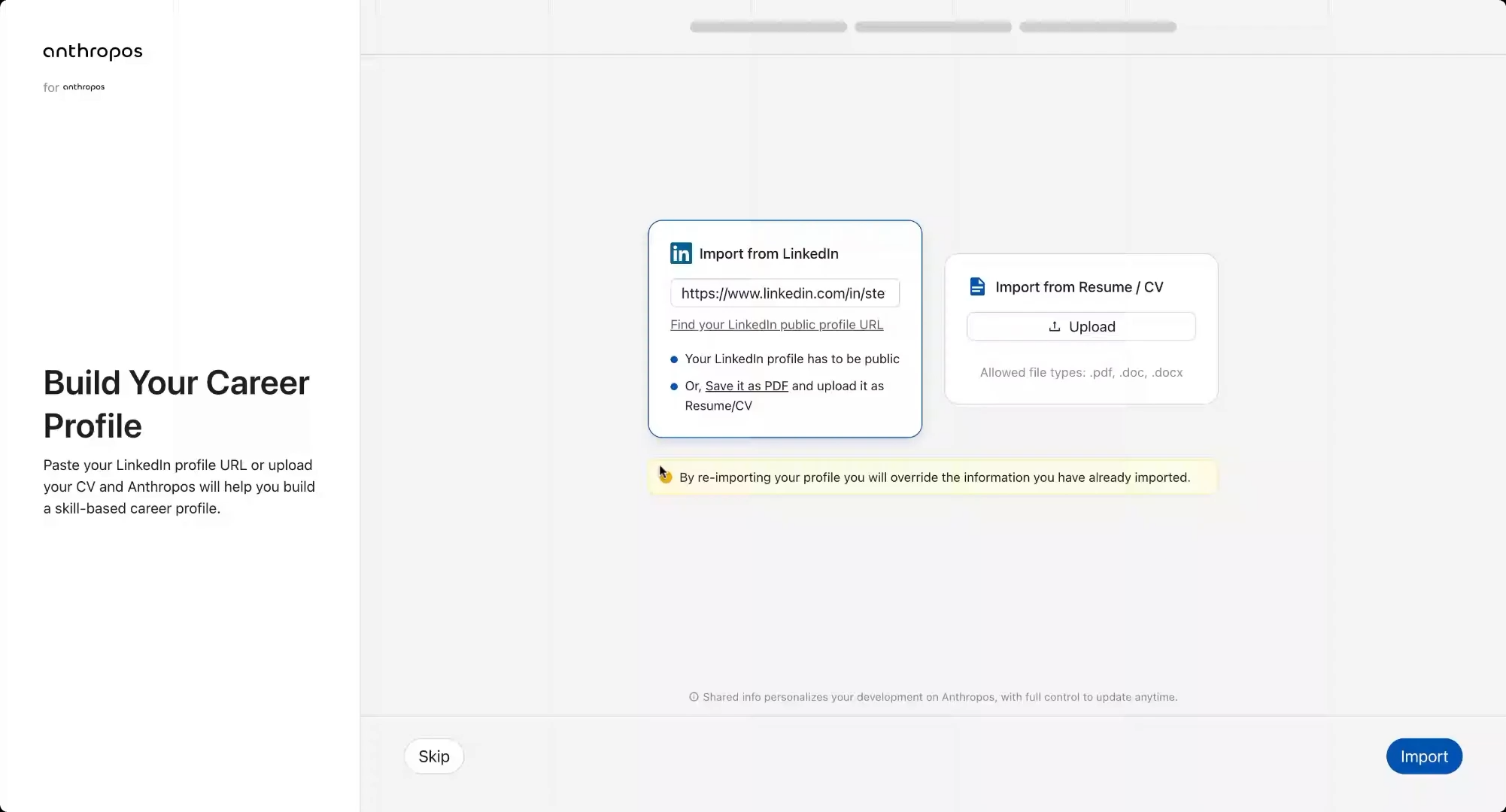
Skills Map auto-extracts skills from CV, HRIS, and LinkedIn for every employee, then guides each person through a structured self-evaluation. In weeks, HR, IT, and business leaders have a living skills inventory they can trust, without running a single survey.
Skills data that’s wrong before it’s even used.
Most organisations have skills data somewhere. The problem is it was never accurate to begin with, and nobody has updated it since.
Self-reported and unverified
A snapshot that ages immediately
No complete inventory to work from
Auto-mapping, three sources, one unified profile.
Skills Map extracts and reconciles skills data from every source you already have, without asking anyone to fill in a form.
CV and resume parsing
Upload or connect your ATS and HRIS to auto-parse every employee’s CV or resume. Skills are extracted, normalised against the 4,000+ skill taxonomy, and placed into the unified profile automatically.
HRIS import
Connect your HRIS: Workday, SAP SuccessFactors, Personio, Factorial, and 100+ others. Existing skills, roles, tenure, certifications, and org structure sync on first import and on a schedule thereafter.
LinkedIn profiles
Parse current role, previous experience, certifications, and endorsements from LinkedIn. Surfaces skills employees have that don’t appear in HRIS records, particularly tech skills and recent training.
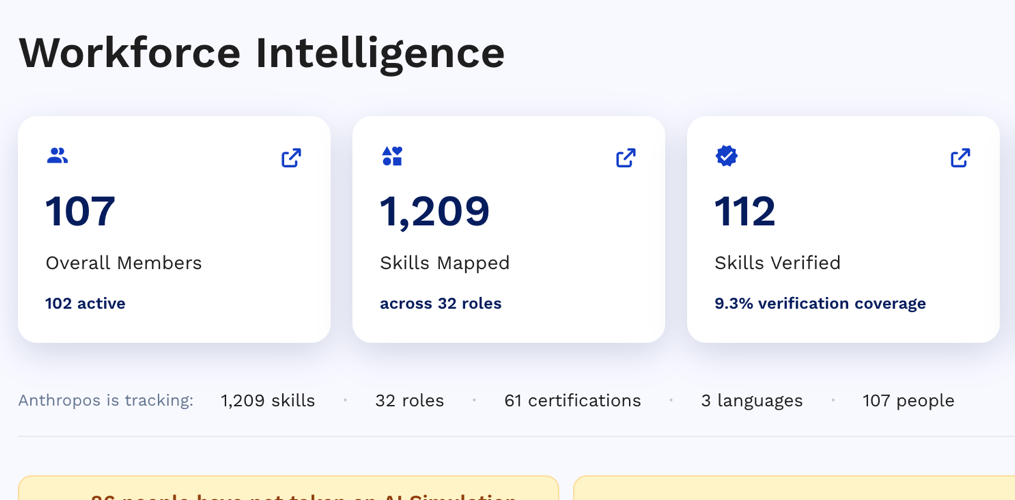
Three sources reconciled into one living inventory, every skill normalised to the same taxonomy, every profile ready to benchmark.
Guided self-evaluation, validated in under 15 minutes.
Each employee sees their auto-mapped profile and completes a structured validation, not a blank form, a guided flow built on what the system already knows about them.
Confirm or adjust auto-extracted skills
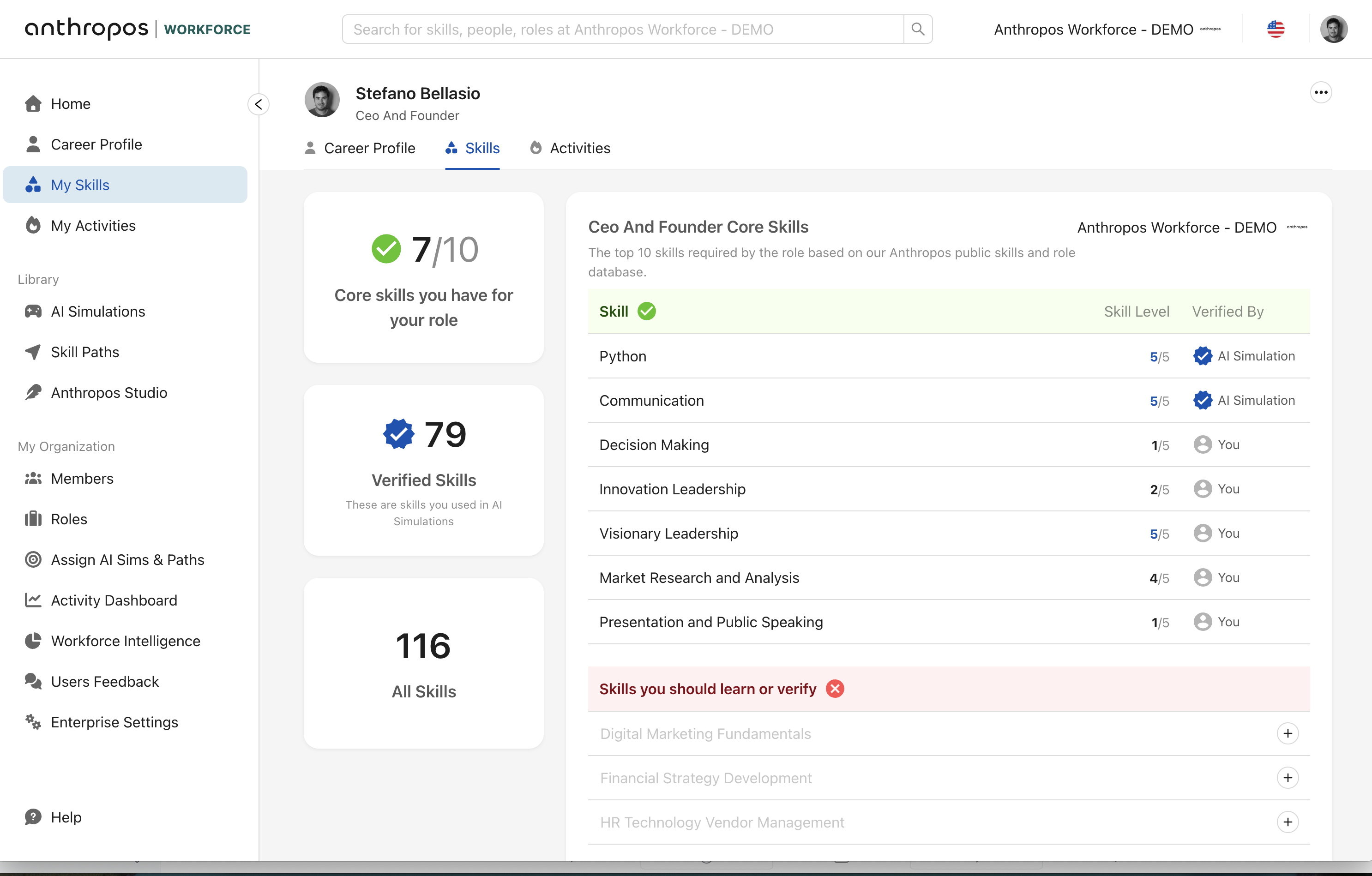
The system shows what it found. The employee confirms, removes, or corrects. No starting from scratch, just validating what’s already there.
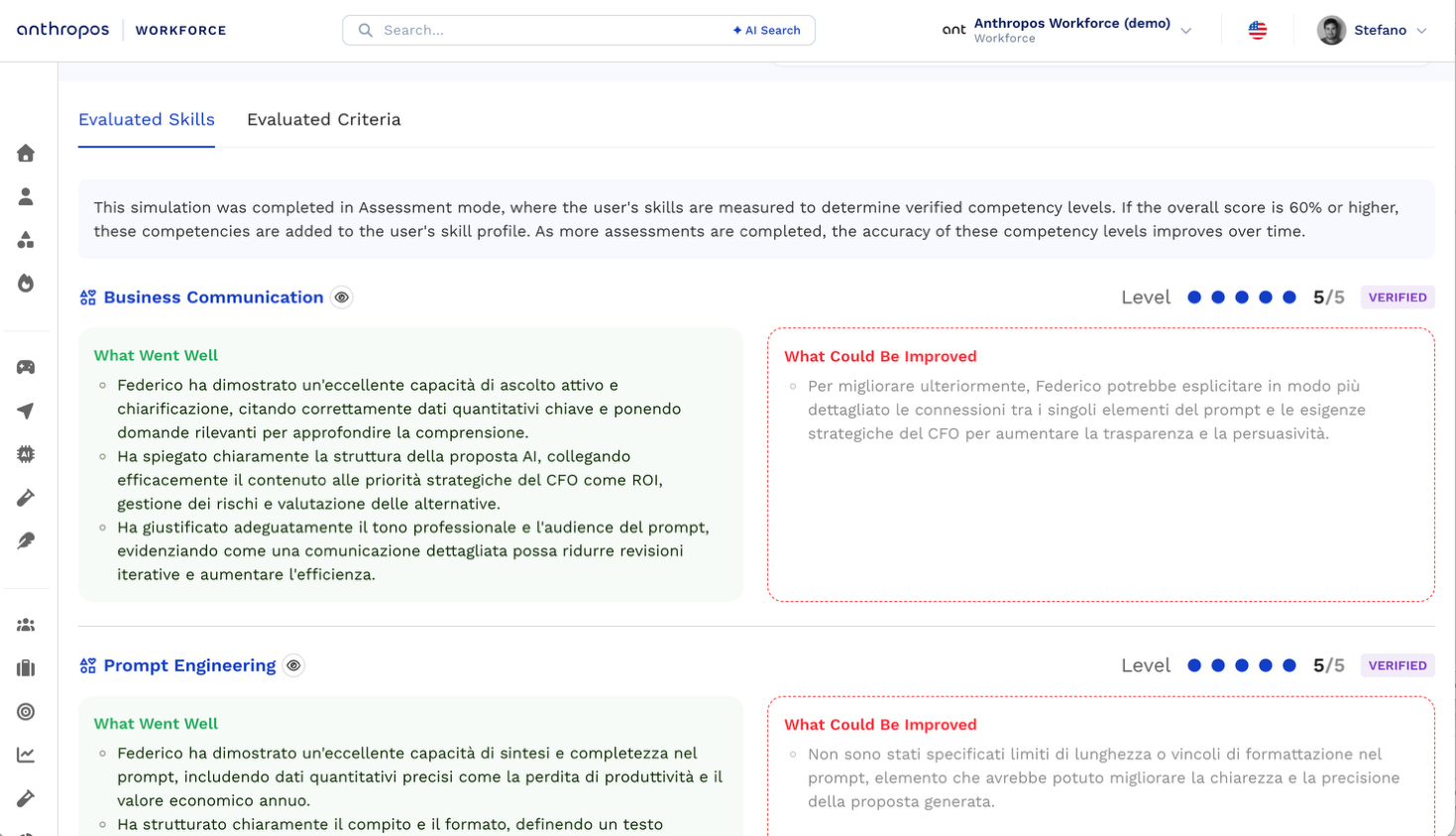
Rate current proficiency, 0 to 5
For each confirmed skill, the employee rates their level against the standardised 0 to 5 competency scale. These self-assessed levels become the baseline before verification.
Add skills the system didn’t detect
Free-text search against the 4,000+ skill taxonomy. Employees add skills from certifications, side projects, or recent work that didn’t appear in the CV or HRIS.
Flag skills in use versus historical
Mark which skills are used daily versus ones from a previous role. This separates active capability from historical experience, a distinction most skills data ignores entirely.
Mapping is half of it. Then you verify.
Auto-mapping and self-evaluation give you an accurate baseline. Verification turns claimed skills into demonstrated ones, through AI Simulations, AI Interviews, and AI Labs.
AI Simulations
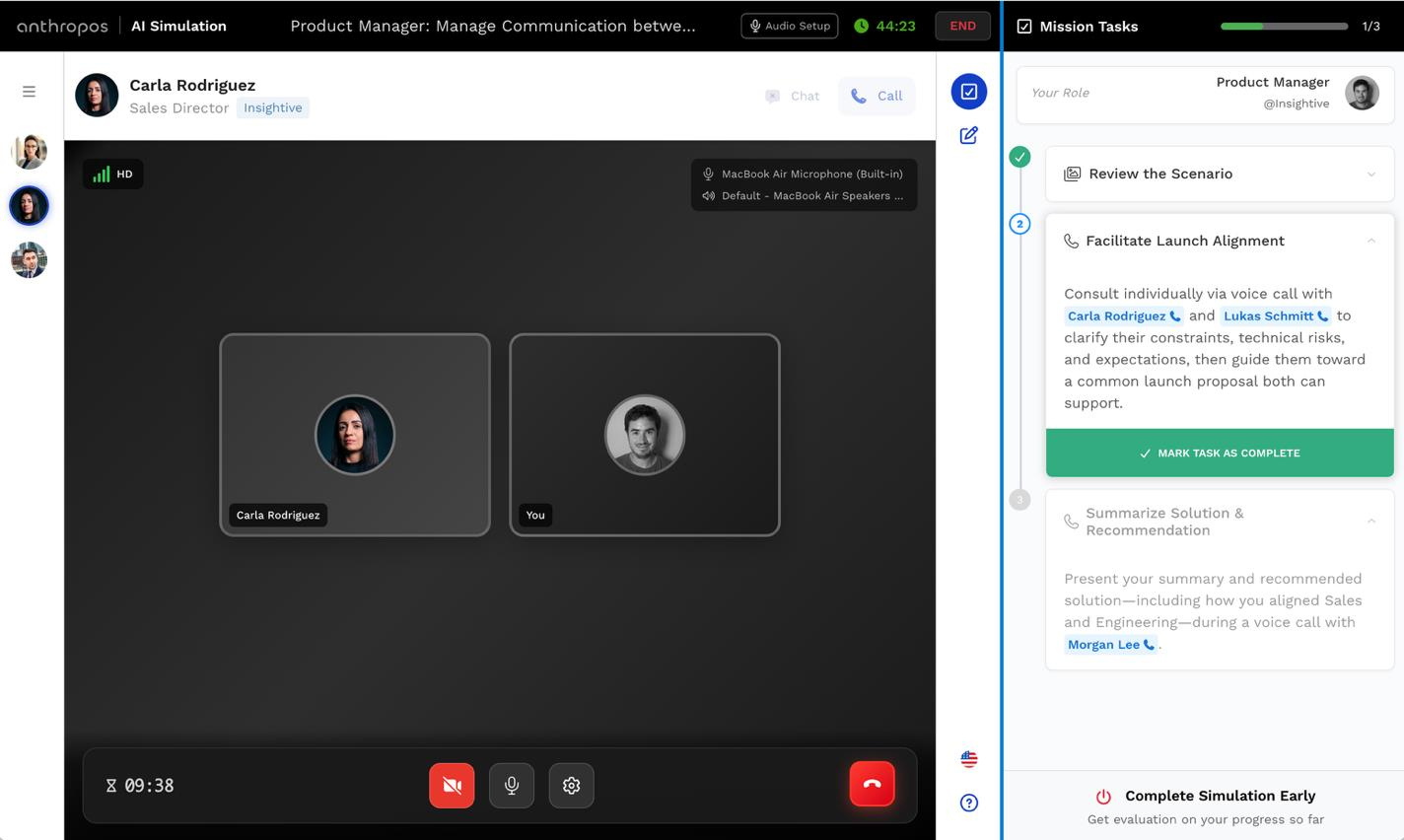
People take on a realistic 5 to 30 minute work scenario and are scored on the skills they actually demonstrate. Objective, evidence-based verification.
AI Interviews
A conversational interview captures context, motivation, and how people actually work, the qualitative signal a score alone cannot give you.
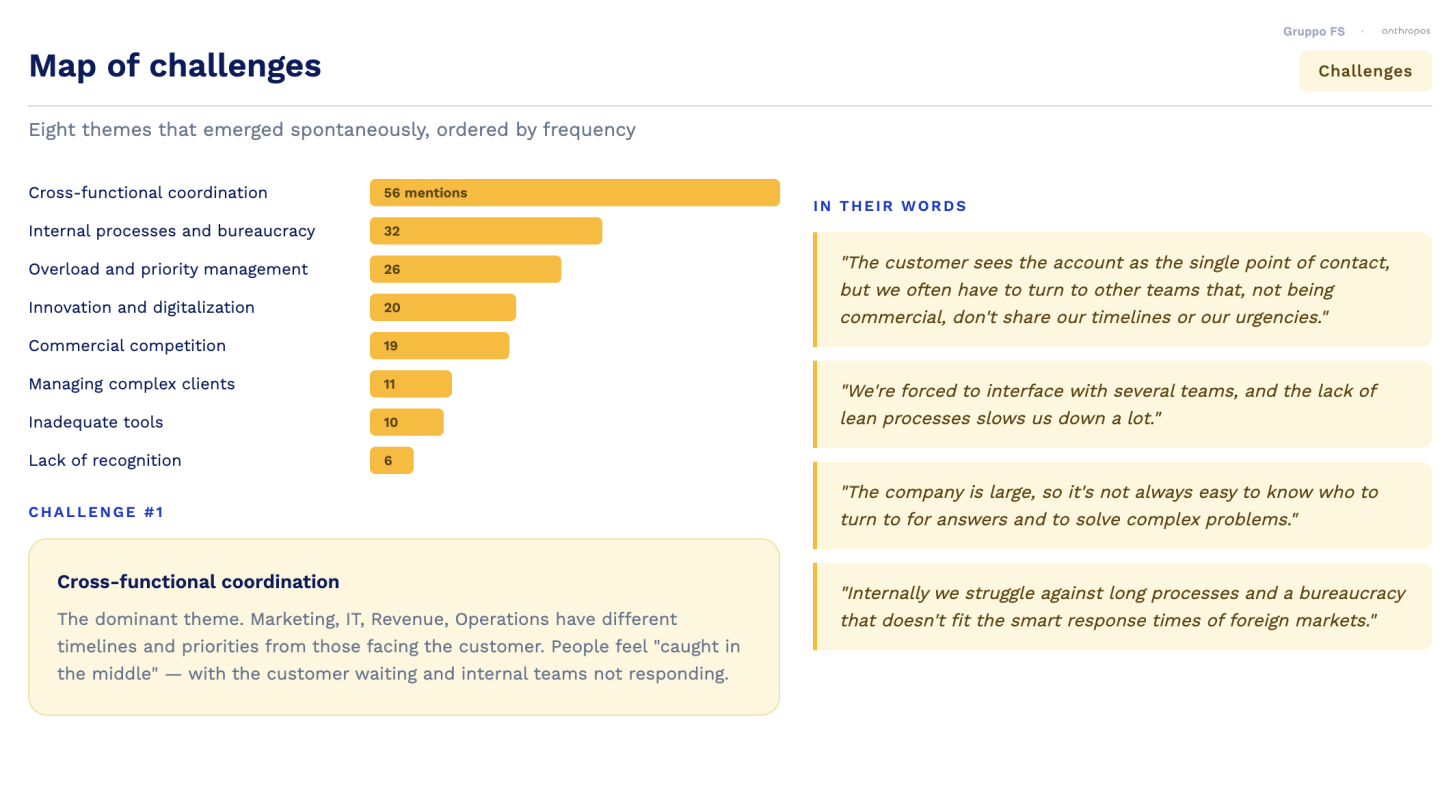
AI Labs
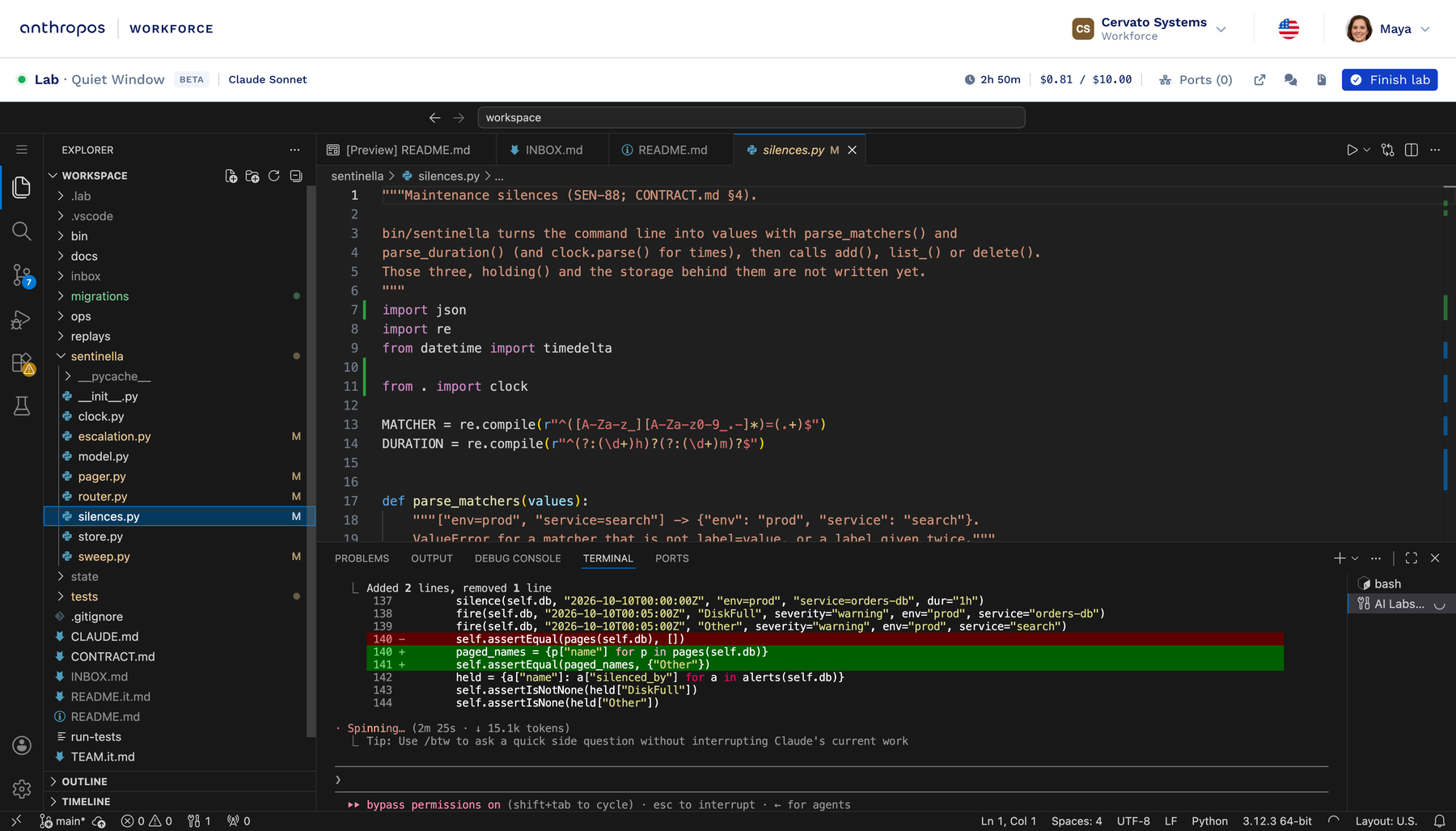
Secure sandboxes where people build with Claude Code and Codex on a real task, so you verify AI and engineering skills hands-on.
Built on the largest skills taxonomy in the market.
Every skill extracted, validated, and self-assessed maps back to the same taxonomy, so data from CV parsing, HRIS, and self-evaluation all speaks the same language.
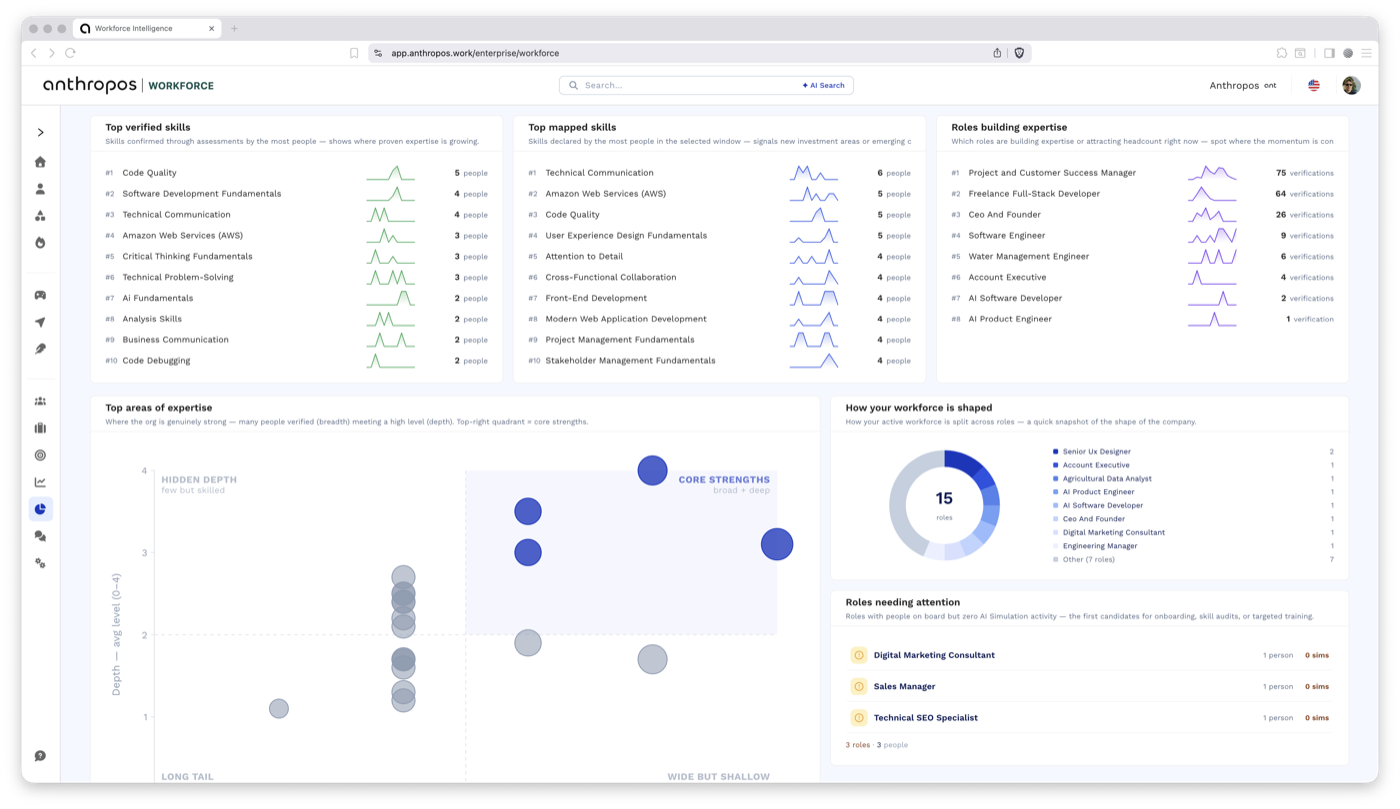
One shared language across the org, so a gap on one team means exactly the same thing on every other.
A skills inventory that powers everything else.
Skills Map is the foundation layer. Every other Anthropos product, assessment, development, workforce intelligence, runs on top of it.
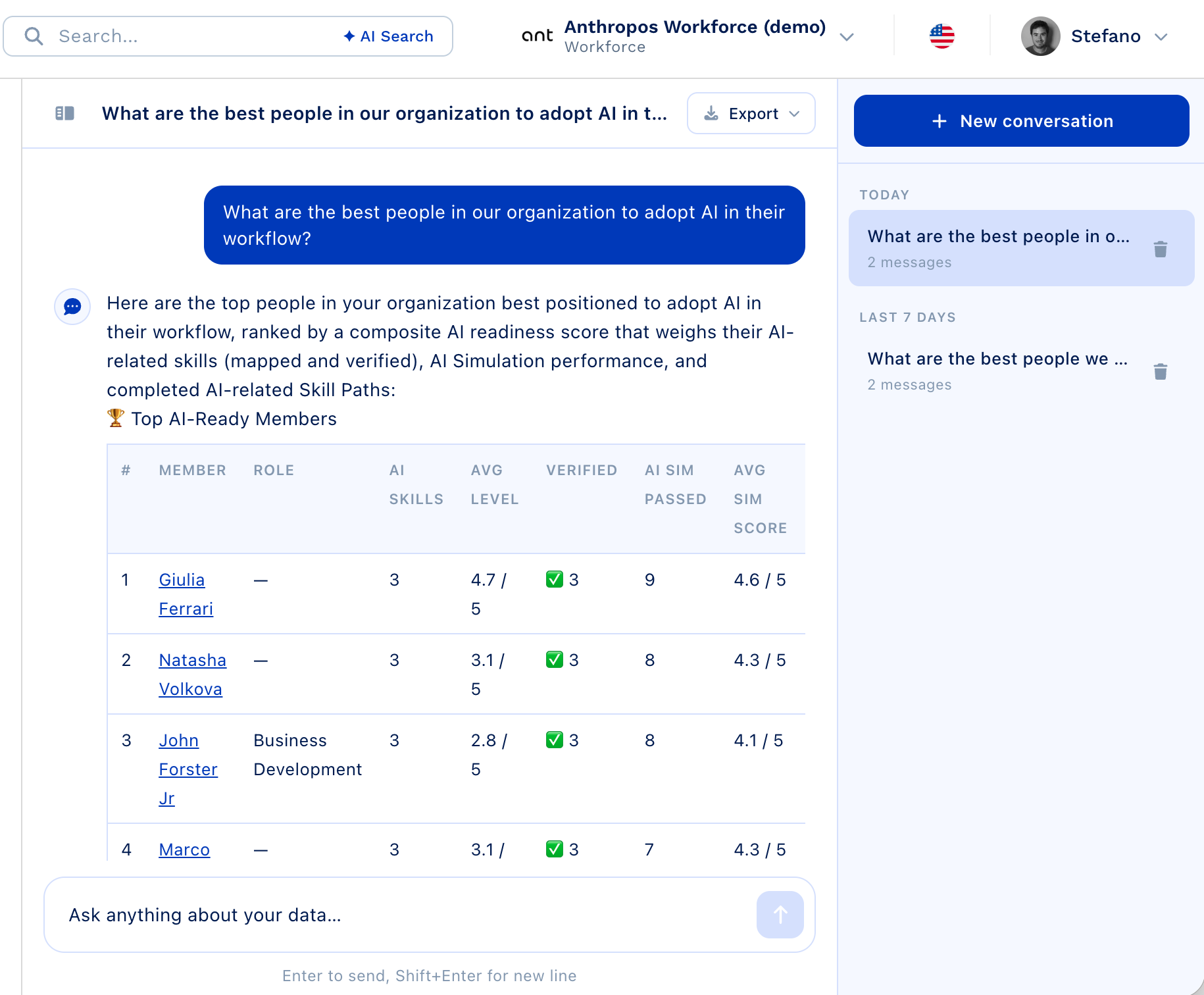
Ask your workforce data anything.
Everything you map and verify becomes searchable in plain language. No dashboards to build, no exports, no analyst in the loop. Ask a question and get an answer.
Phases 1 and 2 of the 5-Phase Workforce Methodology.
Skills Map covers the first two phases, auto-mapping and guided self-evaluation, before any simulation or interview runs. Everything downstream depends on getting this foundation right.
Auto-map skills
CV, HRIS, and LinkedIn parsed into one unified profile.
Guided self-evaluation
Each person validates and rates their skills in under 15 minutes.
AI Simulation assessment
Skills verified objectively in realistic work scenarios.
AI Interview
Qualitative signal on aspiration, context, and perceived friction.
Analysis and reporting
One integrated view for the person and for the organisation.
Skills Map is phases 1 and 2. You do not wait for full coverage to start: the map enriches progressively as self-evaluations complete and simulations run.



What HR, IT, and business leaders ask.
How long does it take to get a first skills map of our organisation?
What if our HRIS skills data is poor or incomplete?
How much time does the self-evaluation ask of employees?
What’s the difference between a self-assessed skill and a verified skill?
Does Skills Map push data back into our HRIS?
Start with a skills inventory you can actually trust.
Book a demo to see how Skills Map auto-builds your workforce profile, and what HR, IT, and business leaders can do once they have skills data they trust.