Platform · Skill Paths

Learning journeys built on skills — not just content

Skill Paths combine videos, documents, and exercises into structured chapters — each linked to the 60K+ skills taxonomy. When someone completes a path, their skill profile updates automatically. Development that’s trackable, targeted, and tied to real business outcomes.

30+
AI Skill Paths ready
60K+
Skills in the taxonomy
300+
AI Simulations to pair with
7
Languages supported
The problem

Content exists. Development doesn’t happen.

Most organisations have no shortage of training content. The problem is that completion data doesn’t translate into capability — and the content isn’t connected to the skills gaps you’re actually trying to close.

Completion is not capability

Training completion data tells you who watched the video. It doesn’t tell you who can apply the skill under real conditions. A certificate is not a verified competency.

Content scattered across platforms

Videos on one platform. Documents on a shared drive. Courses in an LMS nobody logs into. Employees don’t know what to take — or why it’s relevant to their role and gaps.

Development plans built on gut feel

Without real gap data, L&D recommends generic content. Employees complete irrelevant training. The skill gaps in your workforce data don’t move.

Content types

Four content types in structured chapters

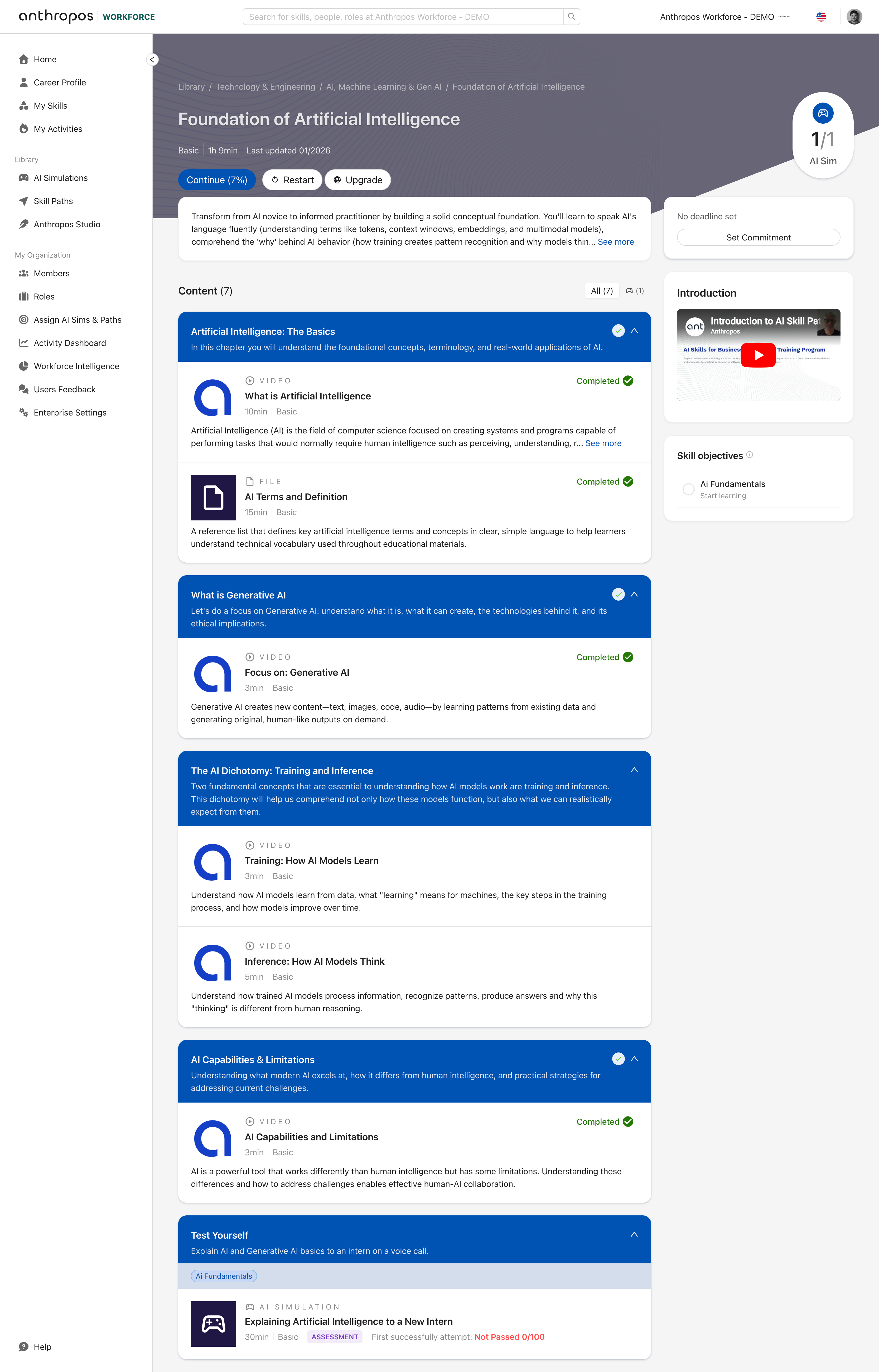
Each Skill Path organises content into sequential chapters with clear learning objectives. Mix content types to match how people actually learn.

Video

Short-form video lessons

The primary format for new concept introduction. Hosted on the platform — no external links. Progress tracked per video, per chapter.

Document

PDFs, slides, references

Frameworks, reference guides, case studies, policy documents. Delivered inline — no download required. Embedded readers for PDF and PPTX.

Exercise

Structured practice tasks

Application challenges that ask the learner to do something — draft a plan, analyse a scenario, complete a template. Reviewed by manager or self-assessed.

Quiz

Knowledge checks

Short multiple-choice or open-answer checks at the end of a chapter. Confirm understanding before moving forward. Results feed progress tracking.

Library & custom

Start from the library — or build your own

30+ Skill Paths ready to assign on day one. Or build a custom path from your own content in hours.

Library paths — ready to assign

Pre-built paths covering AI skills, leadership, sales, engineering, and operations. Structured, taxonomy-linked, and immediately available for any role in your organisation.

  • Prompt Engineering Fundamentals
  • Claude Code for Developers
  • AI-Assisted Analysis for Business Roles
  • GenAI Workflow Design
  • Stakeholder Management Essentials
  • Structured Communication for Leaders

30+ AI Skill Paths
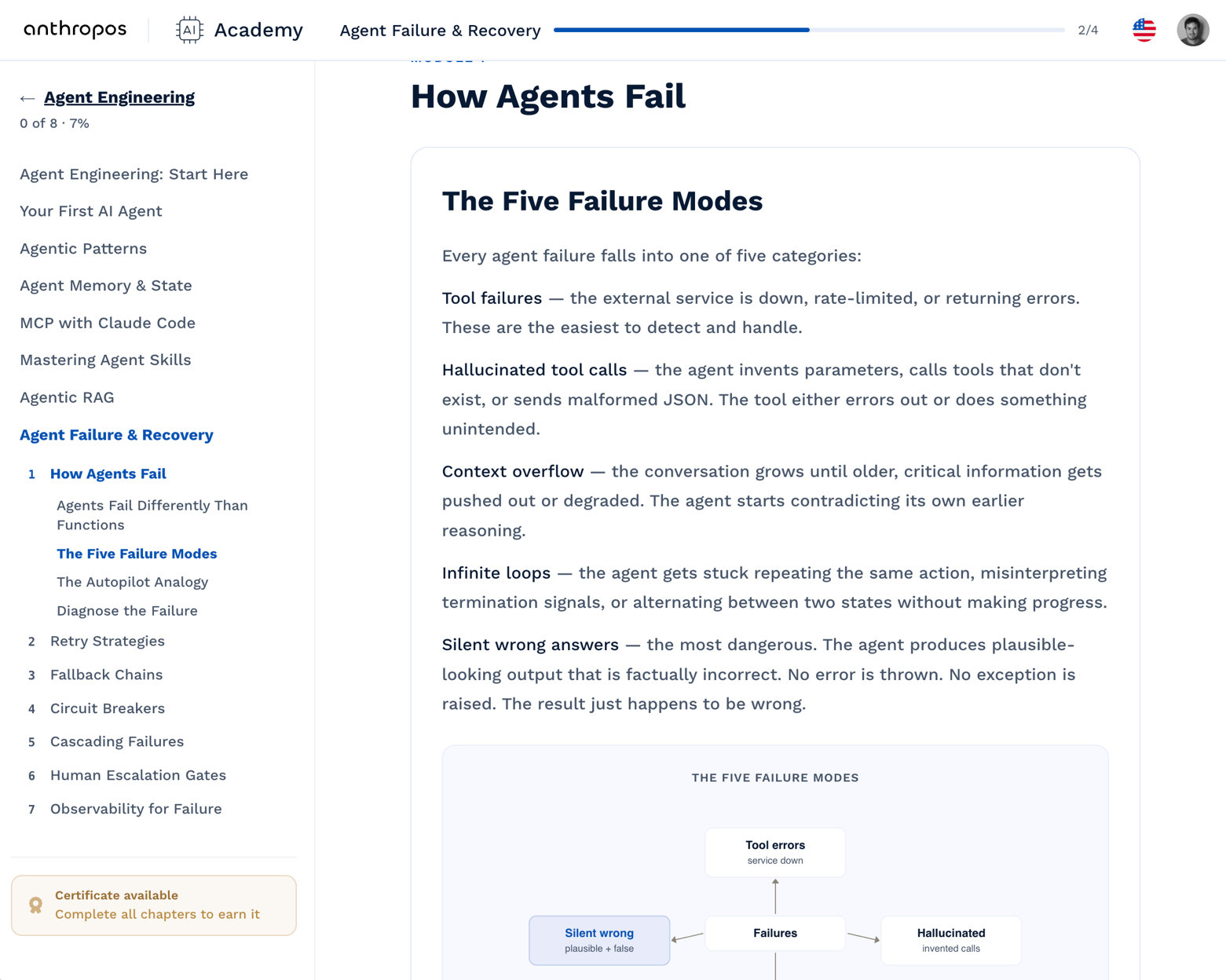
The full library of AI skills paths — from prompt engineering basics to advanced GenAI workflow design — is available to all Workforce clients.

Custom paths — built from your content

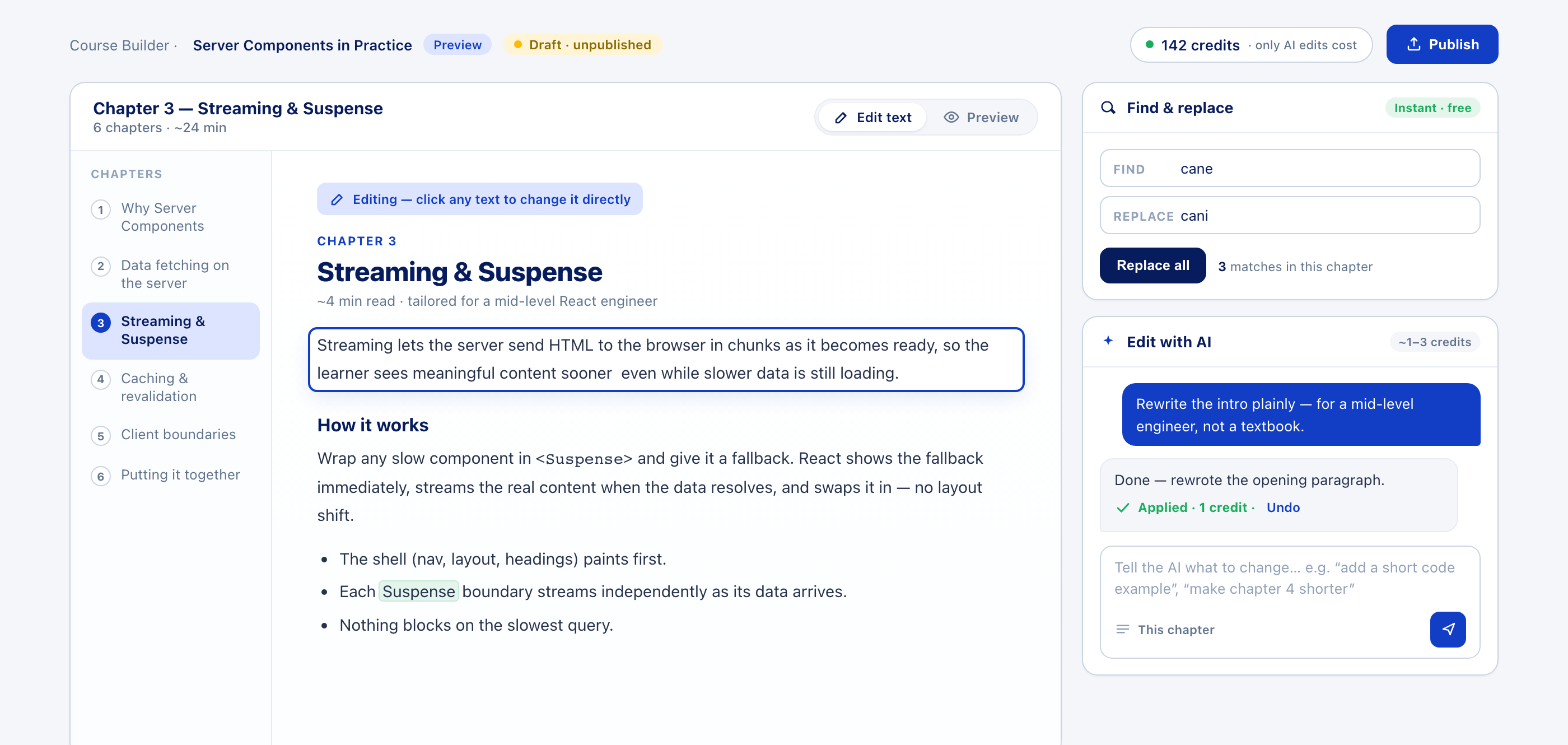
Upload your own videos, documents, and exercises into a structured chapter format. Link each chapter to skills from the taxonomy. Paths appear in the platform alongside library content.

  • Upload PDFs, PPTX, videos, and exercises
  • Organise into chapters with learning objectives
  • Link chapters to 3–4 skills from the taxonomy
  • Assign to roles, teams, or individuals
  • Track completion and progress per person
  • Combine with AI Simulations for full programs

Knowledge Owner model
Train internal subject matter experts to build and maintain custom paths — no vendor dependency, no L&D bottleneck.
The full cycle

Learn, practice, verify — in one platform

Skill Paths handle the learning layer. Pair them with AI Simulations to close the loop — from content completion to verified competency.

Step 1 · Skill Path

Learn the foundations

Structured videos, documents, and exercises build the conceptual foundation. Chapters are sequenced so each one prepares for the next. Progress is tracked automatically.

Step 2 · AI Simulation (Training)

Practice in a real scenario

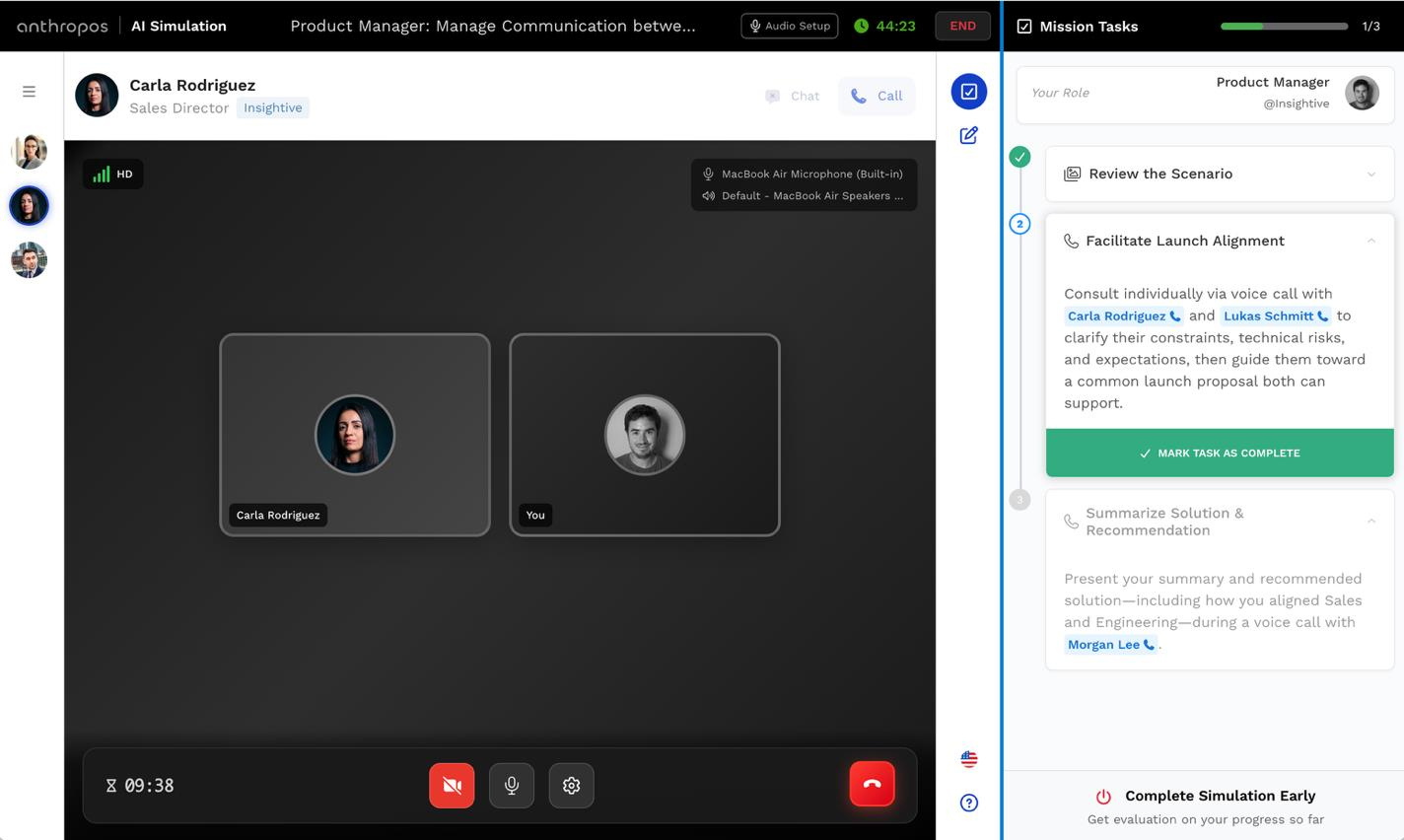
Immediately after completing the path, the learner applies the skills in a 30–45 minute AI Simulation. Training mode — no pass/fail, full feedback on each interaction.

Step 3 · AI Simulation (Assessment)

Verify against the standard

A final assessment simulation confirms competency under objective conditions. The result — a 0–5 skill score with cited evidence — updates the person’s verified skill profile.

Use cases

Built for every type of structured development

Skill Paths work for onboarding, upskilling, compliance, and role-specific development — with the same platform, the same taxonomy, the same progress tracking.

Onboarding programmes

Structured knowledge transfer for new joiners. Combine product, process, and culture paths with role-specific AI Simulations for a complete first-90-days programme.

AI upskilling

30+ ready AI Skill Paths — from prompt engineering basics to Claude Code for engineers and GenAI workflow design for business analysts. Deploy to any role in days.

Compliance & mandatory training

Assign required paths with deadlines, track completion at team and org level, and produce audit-ready reports. Works for data privacy, security, regulatory, and safety training.

Role-specific development

Close the gaps identified in your workforce assessment. Assign paths based on the skills gaps surfaced by AI Simulations and Workforce Intelligence — targeted, not generic.

Trusted by leading enterprises

ItalgasDatrixBytekTogether AIFides
Common questions

Frequently asked

What L&D and CHRO teams ask before building their first Skill Path.

Can we bring our existing training content into Skill Paths?
Yes. Custom Skill Paths are built by uploading your own content — videos, PDFs, PPTX, and exercises — into a structured chapter format. You don’t need to recreate anything. The platform provides the structure, taxonomy linking, and progress tracking on top of your existing materials.
How do Skill Path completions update a person’s skill profile?
When an employee completes a Skill Path, the linked skills are updated in their profile — flagged as “trained” at the appropriate level. These are treated as self-assessed enrichment, not verified competency. To verify, pair the path with an AI Simulation assessment that scores the skill through a realistic work scenario.
Can managers or employees build their own Skill Paths?
Yes. Skill Path creation is available to HR teams, L&D designers, and Knowledge Owners — trained subject matter experts within your organisation. Manager self-service for building and assigning lightweight paths is on the roadmap for H1 2026.
How do Skill Paths work within a Development Programme?
Development Programmes (coming H1 2026) bundle Skill Paths and AI Simulations into a single structured journey — assigned as a unit, with a combined progress view. A programme might include two Skill Paths, one training simulation, and a final assessment simulation — all tracked together as one development initiative.
What languages are Skill Paths available in?
Library Skill Paths are available in English, Italian, German, French, Spanish, Dutch, and Japanese. Custom Skill Paths are in whatever language your source content is recorded in — the platform doesn’t auto-translate custom content, but the chapter structure, progress tracking, and taxonomy links work in all supported languages.
Skill Paths

Give your team learning that’s connected to the gaps that matter

Book a demo to see Skill Paths in the platform — and how they connect to your workforce assessment data and AI Simulations.