Workforce upskilling has become a priority for organizations facing rapid technological change and evolving business demands. Yet despite significant investments in training platforms, online courses, and development programs, many companies struggle to see tangible improvements in performance.
Employees complete learning modules but continue to face challenges when applying new skills in real situations. Managers dedicate time and budget to development initiatives without gaining clear visibility into whether teams are becoming more effective. This gap between learning activity and business impact has led many leaders to question the true value of traditional upskilling efforts.
The problem is rarely a lack of commitment. Instead, it often stems from the absence of a structured workforce upskilling strategy that connects capability development directly to organizational goals.
TL;DR – What this article is about:
- Many workforce upskilling initiatives fail because they are not aligned with business priorities or real capability gaps.
- Effective strategies begin with understanding current workforce readiness through realistic assessment methods.
- Simulation-based learning helps employees build practical skills that translate into performance improvements.
- Platforms like Anthropos enable organizations to track skill progression and continuously refine their upskilling strategy.
Workforce Upskilling Strategy: Starting With Business Priorities, Not Training Catalogs
An effective workforce upskilling strategy begins with clarity on what the organization is trying to achieve. Whether the objective is to adopt new technologies, improve customer experience, expand into new markets, or increase operational efficiency, skill development must be aligned with these priorities.
Too often, companies begin by selecting training content or learning platforms before defining the capabilities required for success. This approach can lead to fragmented initiatives that generate activity but not meaningful progress.
By contrast, organizations that start with business priorities can identify the specific skills that will drive results. They can focus on developing competencies that enable teams to execute strategy more effectively rather than offering generic programs that may not address critical needs.
This alignment also makes it easier to communicate the purpose of workforce upskilling initiatives, helping employees understand how development opportunities relate to broader organizational objectives.
Understanding Workforce Capability Before Designing Programs
Before implementing an upskilling plan, organizations need a reliable view of current workforce capability. Without this insight, development initiatives risk being based on assumptions rather than evidence.
Traditional methods such as manager feedback or self-assessments can provide some direction, but they often fail to capture how employees perform under real conditions. Skills may appear sufficient in theory while gaps remain hidden in practice.
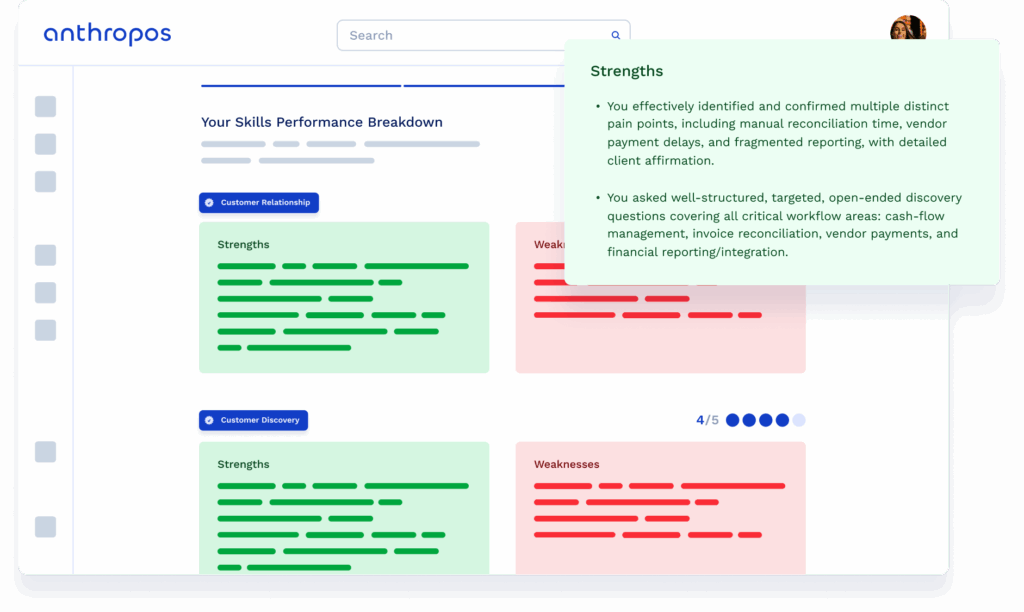
Simulation-based workforce assessment offers a more accurate foundation for strategy design. Through workforce upskilling platforms like Anthropos, companies can observe how individuals respond to realistic challenges, collaborate with stakeholders, and apply technical knowledge in complex scenarios. These observations generate structured data that helps leaders identify strengths, development areas, and potential mobility pathways.
When workforce capability is clearly understood, upskilling efforts can be targeted and efficient.
Designing Learning Experiences That Build Real Skills
Once priorities and capability gaps are identified, the next step is to design learning experiences that translate into real performance improvements. This requires moving beyond passive content consumption toward more immersive and practical development approaches.
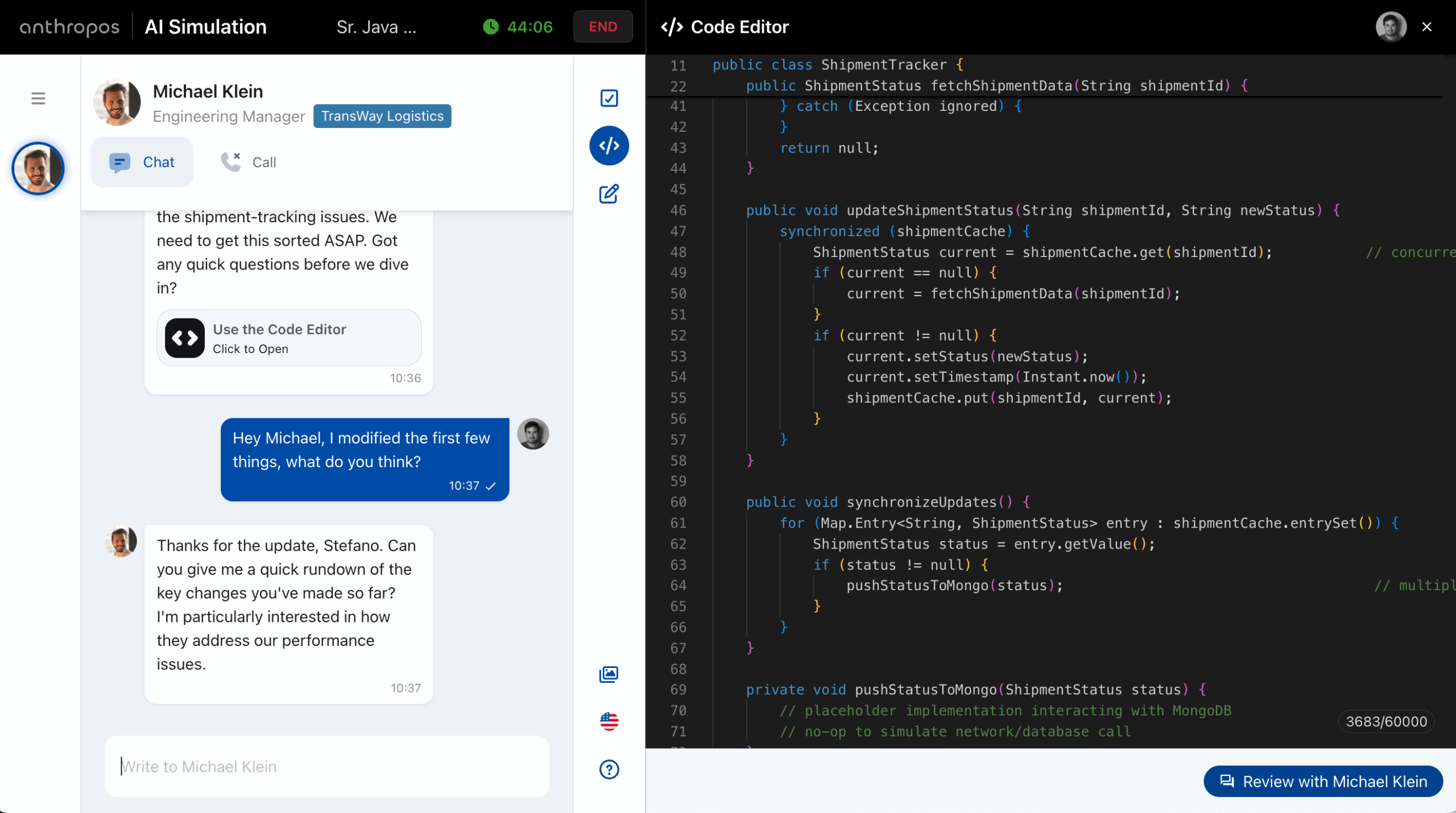
Simulation-based learning allows employees to engage with tasks that mirror their daily responsibilities. Instead of studying abstract concepts, participants can practice decision-making, problem-solving, and communication in safe but realistic environments. This hands-on approach helps build confidence and accelerates skill acquisition.
Anthropos supports this model by enabling organizations to create customized skill paths that reflect their specific workflows, tools, and business challenges. Employees can progress through structured development journeys while demonstrating their capabilities in context.
This method not only improves learning outcomes but also increases engagement. When development experiences feel relevant and actionable, employees are more likely to invest effort and take ownership of their growth.
Measuring Progress and Adapting the Workforce Upskilling Strategy Over Time
A workforce upskilling strategy should evolve continuously as business needs change. Measuring progress is therefore essential to ensure that development initiatives remain aligned with organizational goals.
Rather than focusing solely on metrics such as training completion rates, companies should evaluate how skill development influences performance indicators. These might include improvements in project delivery, enhanced customer satisfaction, or increased internal mobility.
Anthropos provides visibility into skill progression through structured insights generated during simulations. Leaders can track how capabilities develop across teams and functions, allowing them to refine learning pathways and allocate resources more effectively.
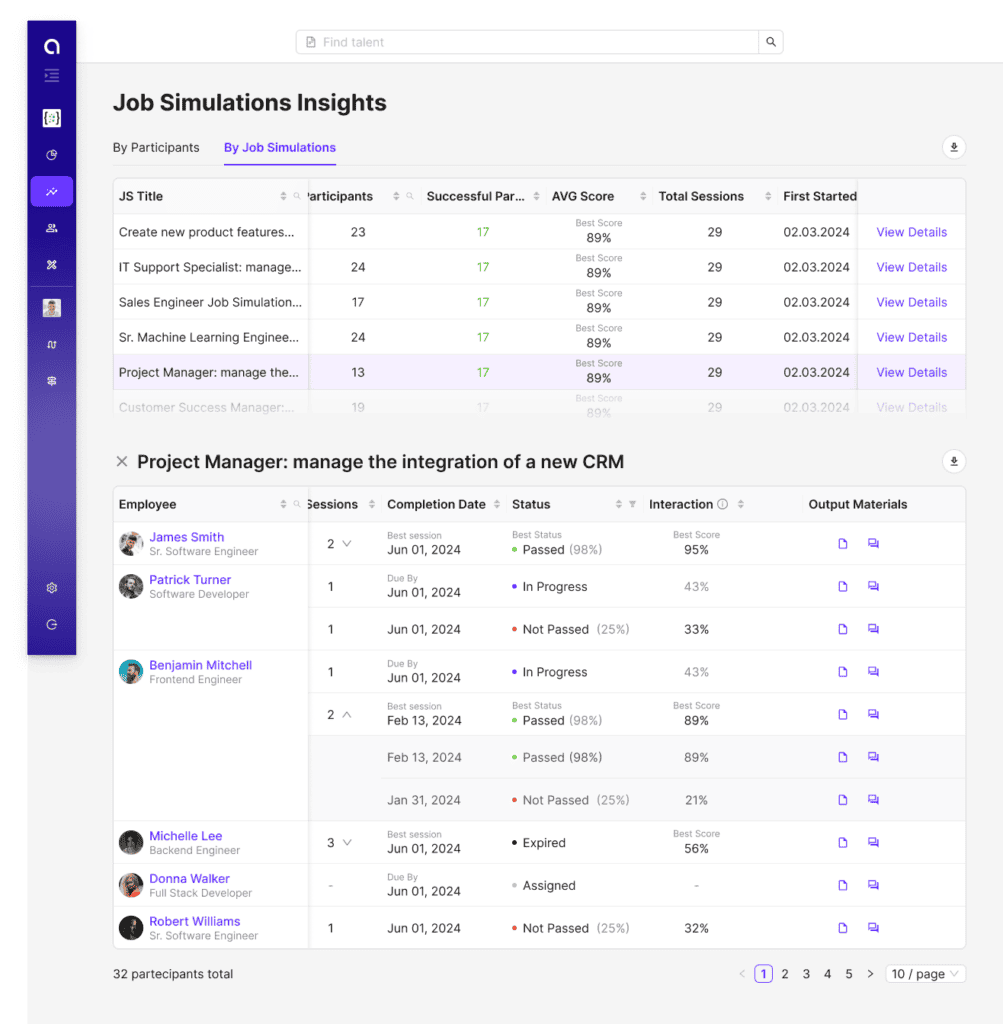
This data-driven approach transforms upskilling from a static program into a dynamic capability that supports long-term growth.
Embedding Upskilling Into Organizational Culture
For workforce upskilling strategies to deliver lasting value, they must become part of everyday work rather than isolated initiatives. Organizations that successfully embed development into their culture encourage employees to view learning as an ongoing process.
Managers play a critical role in reinforcing this mindset. By linking development goals to real business challenges and recognizing skill progression, they help create an environment where continuous improvement is expected and supported.
Technology platforms like Anthropos can facilitate this cultural shift by making development interactive and measurable. Employees gain immediate feedback on their performance in simulations, while leaders gain confidence that learning investments are producing meaningful outcomes.
Over time, this integration of upskilling into daily workflows helps organizations remain agile and prepared for future challenges.
From Training Activity to Workforce Capability
Building an effective workforce upskilling strategy requires a shift in perspective. Companies must move from viewing development as a series of training activities to understanding it as a strategic lever for capability building.
By aligning skill development with business priorities, assessing workforce readiness through realistic scenarios, and measuring impact through performance outcomes, organizations can ensure that upskilling efforts deliver tangible value.
Anthropos enables this transformation by combining immersive simulations with structured skill paths and data-driven insights. This approach helps leaders design development initiatives that prepare teams for evolving responsibilities and support sustained business performance.
In a world where change is constant, the organizations that succeed will be those that treat workforce upskilling not as an optional program, but as a core component of their strategy.
FAQ – Workforce Upskilling Strategy
What is a workforce upskilling strategy?
A workforce upskilling strategy is a structured plan that helps organizations develop employees’ existing skills to support business objectives and prepare for future challenges.
Why do many upskilling programs fail?
They often focus on training content rather than real capability development, lack alignment with business goals, and provide limited visibility into skill progression.
How can companies assess workforce capability before upskilling?
Organizations can use realistic simulations and structured performance insights to understand how employees apply their skills in practical scenarios.
How can workforce upskilling improve business performance?
Upskilling helps teams adapt to new technologies, increase productivity, support innovation initiatives, and reduce reliance on external hiring.
How does Anthropos support workforce upskilling strategies?
Anthropos provides AI-powered simulations and customized skill paths that enable organizations to measure capability development and design targeted learning initiatives.

March 31, 2026
Most read about
Recent post
Related Posts
Organizations today are operating in an environment where talent challenges are no longer limited to hiring. Retaining skilled employees, ensuring teams remain productive, and enabling internal mobility have become equally critical priorities. As roles evolve and new technologies reshape workflows, employees expect opportunities to grow and adapt rather than remain confined to static responsibilities. Workforce ...

Across industries, companies are facing a growing realization: the skills that made teams successful in the past are no longer sufficient to support future growth. Technological disruption, new business models, and evolving customer expectations are reshaping how work gets done. In this environment, workforce upskilling is no longer a learning initiative owned exclusively by HR ...

Hiring the right software engineer is just the beginning. Today that means finding someone that has great coding skills but also the ability to pick up Cursor, Claude Code or other AI-based solutions to make their productivity 2x/3x the one of a normal engineer. Still, it doesn't change the fact that once they’re in, the ...