Organizations today are operating in an environment where talent challenges are no longer limited to hiring. Retaining skilled employees, ensuring teams remain productive, and enabling internal mobility have become equally critical priorities. As roles evolve and new technologies reshape workflows, employees expect opportunities to grow and adapt rather than remain confined to static responsibilities.
Workforce upskilling is emerging as one of the most effective ways to address these challenges. When companies invest in developing the capabilities of their people, they strengthen not only performance outcomes but also engagement and long-term organizational resilience.
This shift reflects a broader understanding that workforce capability is closely tied to business stability. Teams that continuously build new skills are better prepared to handle change, deliver consistent results, and contribute to innovation initiatives.
TL;DR – How Workforce Upskilling Improves Retention, Mobility, and Performance:
- Workforce upskilling improves employee retention by providing meaningful development opportunities and career progression pathways.
- Structured skill development supports internal mobility and reduces reliance on external hiring.
- Simulation-based learning enhances real performance by focusing on practical capability development.
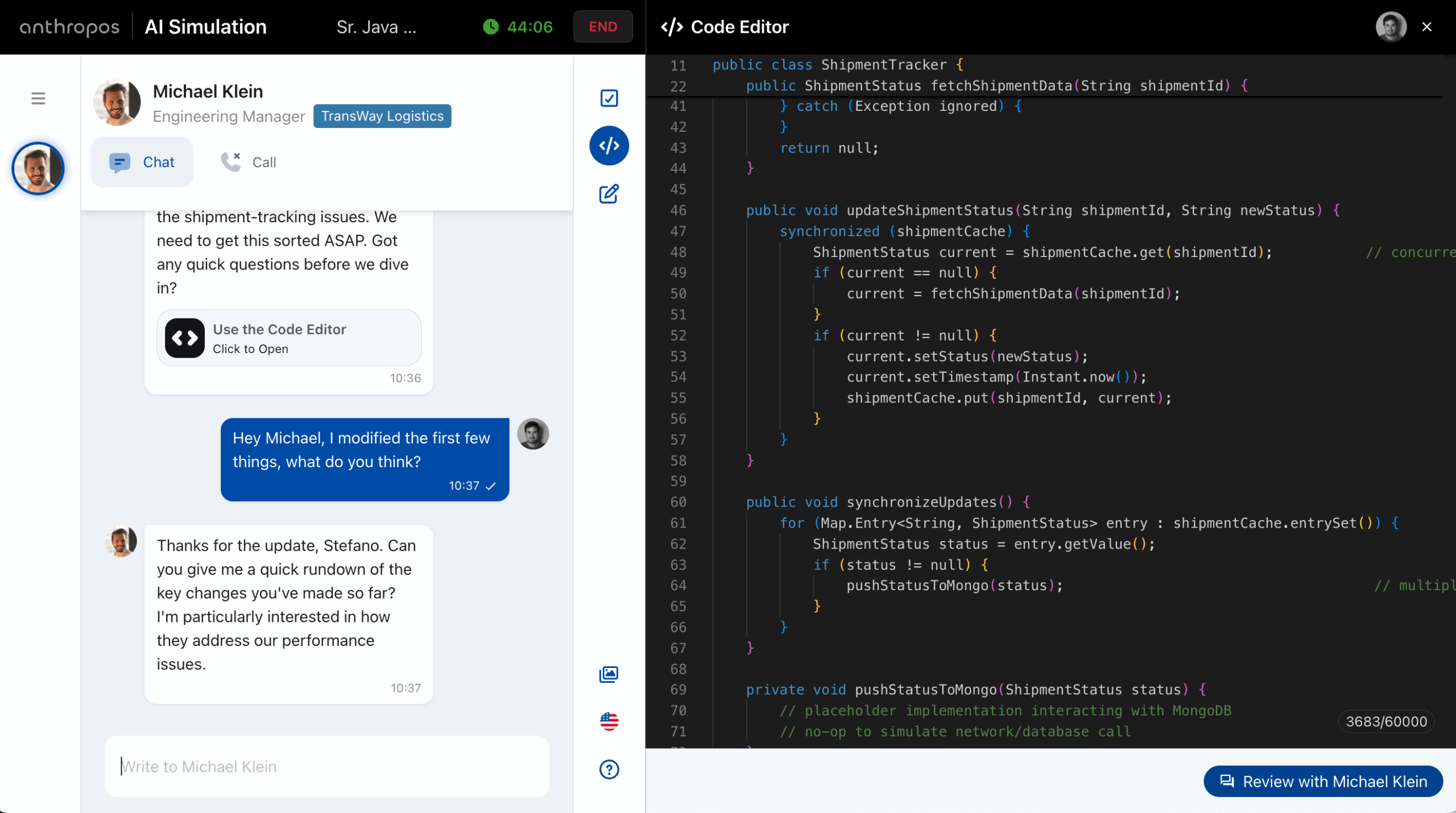
Platforms like Anthropos help organizations track skill progression and prepare teams for continuous technological change.
Workforce Upskilling Benefit #1: Strengthening Retention Through Meaningful Development Opportunities
Employee retention is increasingly influenced by perceptions of growth and future opportunity. Professionals want to feel that their skills remain relevant and that their organization is committed to supporting their development. When these expectations are not met, turnover risk increases, particularly among high-performing individuals.
Workforce upskilling programs help address this concern by providing structured pathways for progression. Employees who see clear opportunities to expand their capabilities are more likely to remain engaged and invested in organizational goals. They recognize that their employer is not only benefiting from their current contributions but also preparing them for future roles.
Simulation-based learning experiences offered through Anthropos can reinforce this sense of progression. By participating in realistic scenarios that mirror new responsibilities, employees gain confidence in their ability to take on greater challenges. This practical exposure strengthens commitment and reduces uncertainty about career development.
Benefit #2: Enabling Internal Mobility and Reducing Hiring Pressure
Internal mobility has become a strategic priority for many organizations seeking to optimize talent utilization. Moving employees into new roles can be faster and more cost-effective than recruiting externally, while also preserving institutional knowledge.
However, mobility decisions require reliable insight into workforce capability. Without structured assessment, leaders may hesitate to promote or redeploy employees due to uncertainty about readiness. This can lead to missed opportunities for growth and continued reliance on external hiring.
Workforce upskilling supports mobility by helping employees build the skills required for new responsibilities. Through Anthropos simulations and structured skill paths, organizations can observe how individuals perform in scenarios aligned with target roles. These insights enable more confident decision-making and facilitate smoother transitions across teams or functions.
Over time, this approach helps create a more agile workforce that can respond quickly to evolving business needs.
Benefit #3: Improving Performance Through Real Capability Development
Upskilling initiatives are often justified in terms of long-term potential, but their impact on day-to-day performance can be equally significant. Employees who develop stronger problem-solving abilities, communication skills, and technical expertise are better equipped to handle complex challenges and deliver high-quality outcomes.
Traditional training programs sometimes struggle to produce these improvements because they emphasize knowledge acquisition rather than skill application. Simulation-based learning addresses this limitation by immersing participants in realistic situations where they must act, decide, and collaborate.
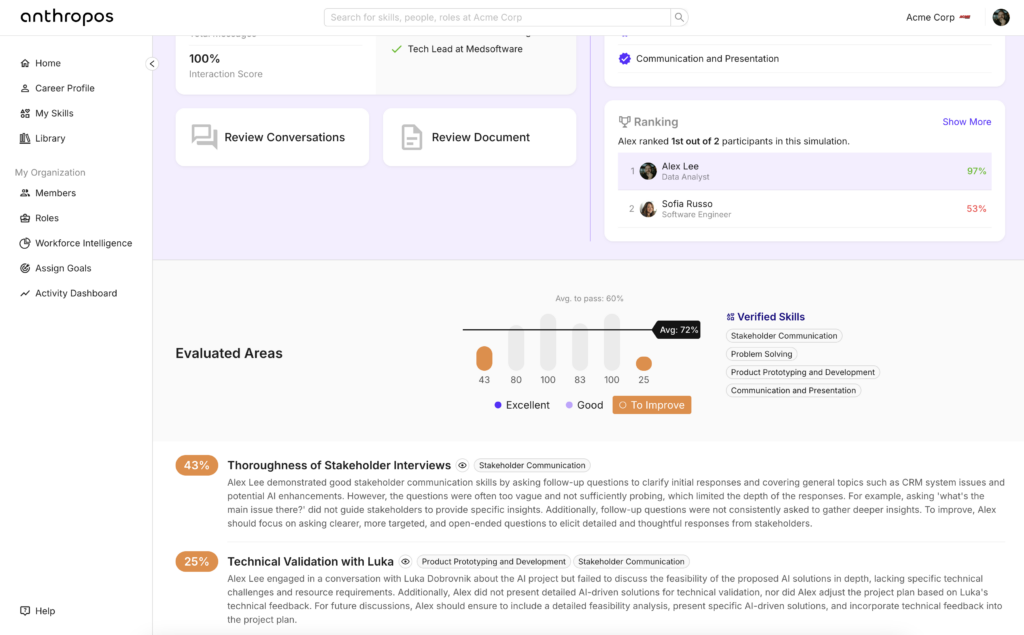
Anthropos enables organizations to capture detailed insights into how employees approach these scenarios. Leaders can identify patterns that influence performance, such as the ability to prioritize effectively, manage stakeholder expectations, or integrate data-driven insights into decision-making.
By focusing on real capability development, workforce upskilling becomes a direct contributor to operational efficiency and customer satisfaction.
Benefit #4: Supporting Workforce Adaptability in an AI-Driven Environment
Artificial intelligence is accelerating the pace of change across many industries. Employees must adapt to new tools, workflows, and expectations more frequently than in the past. Organizations that fail to support this adaptation risk performance declines and increased employee frustration.
Workforce upskilling programs help teams build the confidence required to work alongside intelligent systems. Through immersive simulations, employees can practice integrating AI tools into their tasks, evaluate automated recommendations, and refine their decision-making processes.
Anthropos Workforce provides a structured environment for this type of development. By combining realistic scenarios with continuous assessment, organizations can track how adaptability evolves and ensure that teams remain prepared for technological change.
This proactive approach reduces disruption and helps maintain momentum during transformation initiatives.
Benefit #5: Creating Long-Term Value Through Continuous Development
The benefits of workforce upskilling extend beyond immediate performance gains. Organizations that embed development into their culture create conditions for sustained growth and innovation. Employees feel empowered to experiment, learn from feedback, and contribute new ideas.
This cultural shift also strengthens collaboration. When individuals are encouraged to develop new capabilities, they become more open to cross-functional experiences and knowledge sharing. Teams become more resilient because they can draw on a broader range of skills to address challenges.
Anthropos supports this long-term value creation by providing data-driven visibility into skill progression. Leaders can understand how workforce capability evolves over time and align development initiatives with strategic priorities. This insight helps organizations maintain competitive advantage in an environment where change is constant.
Workforce Upskilling as a Strategic Advantage
Ultimately, workforce upskilling is not just a response to talent shortages or technological disruption. It is a strategic lever that enables organizations to strengthen retention, enhance mobility, and improve performance simultaneously.
By investing in practical skill development and measuring its impact, companies can transform workforce capability into a source of competitive differentiation. Anthropos helps make this transformation possible by combining immersive simulations with structured insights that guide talent decisions.
In a business landscape where agility and adaptability determine success, organizations that prioritize workforce upskilling will be better positioned to sustain growth and navigate future challenges.
FAQ – Benefits of Workforce Upskilling
How does workforce upskilling improve employee retention?
Upskilling initiatives demonstrate organizational commitment to development, increasing engagement and reducing turnover risk among skilled professionals.
Why is workforce upskilling important for internal mobility?
It helps employees build the capabilities required for new roles, enabling leaders to make confident mobility decisions and optimize talent utilization.
Can workforce upskilling improve performance?
Yes. By focusing on practical skill application, upskilling programs help employees solve problems more effectively and deliver better business outcomes.
How does AI influence the need for workforce upskilling?
AI introduces new tools and workflows that require employees to adapt continuously. Upskilling programs help teams build confidence and readiness for these changes.
How does Anthropos support workforce upskilling initiatives?
Anthropos provides immersive simulations and structured skill insights that help organizations design targeted development pathways and measure their impact.

March 31, 2026
Most read about
Recent post
Related Posts
Workforce upskilling has become a priority for organizations facing rapid technological change and evolving business demands. Yet despite significant investments in training platforms, online courses, and development programs, many companies struggle to see tangible improvements in performance. Employees complete learning modules but continue to face challenges when applying new skills in real situations. Managers dedicate ...

Across industries, companies are facing a growing realization: the skills that made teams successful in the past are no longer sufficient to support future growth. Technological disruption, new business models, and evolving customer expectations are reshaping how work gets done. In this environment, workforce upskilling is no longer a learning initiative owned exclusively by HR ...

Hiring the right software engineer is just the beginning. Today that means finding someone that has great coding skills but also the ability to pick up Cursor, Claude Code or other AI-based solutions to make their productivity 2x/3x the one of a normal engineer. Still, it doesn't change the fact that once they’re in, the ...