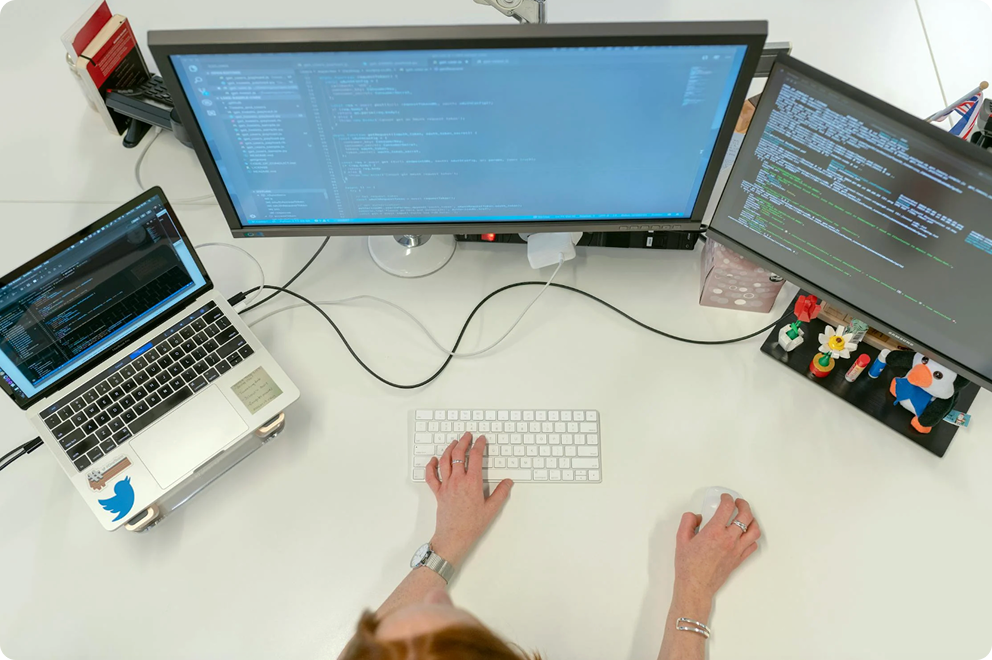
For decades, companies have made talent decisions based on static snapshots: job titles, performance reviews, self-assessments.
But in today’s environment—where roles evolve rapidly, AI is reshaping workflows, and skills become outdated in months—those snapshots are no longer enough. The real competitive advantage lies in understanding what your people can actually do right now, and how ready they are to grow into what comes next.
This is the purpose of workforce assessment. Once a process limited to HR compliance or annual reviews, it has now become a strategic necessity. Companies are realizing they can’t afford to make decisions about hiring, promotion, training, or reorganization without current, reliable insight into their workforce’s real capabilities.
What’s changed isn’t just the pressure—it’s also the opportunity. AI, simulations, and better behavioral data have made it possible to move from assumptions to evidence. The question is no longer “should we assess?” but “how do we assess the right way?”
What we are going to cover in this blog:
-
Traditional workforce assessments based on job titles, reviews, and self-reports are no longer sufficient in a fast-changing environment where skills evolve quickly and AI reshapes work.
-
Modern workforce assessment uses AI, simulations, and behavioral data to evaluate how employees actually perform in realistic work scenarios.
-
Platforms like Anthropos help companies generate actionable insights on skills, decision-making, and AI usage, enabling better hiring, promotion, and development decisions.
-
These insights support strategic initiatives such as internal mobility, targeted upskilling, and measuring AI readiness across the workforce.
Rethinking Workforce Assessment: From Process to Intelligence
At its core, workforce assessment is the structured evaluation of employee skills, behaviors, and potential. But the way it has traditionally been done—via forms, static frameworks, or manager ratings—has major limitations. These methods tend to be subjective, lagging, and overly generic. They don’t reflect what people can do in real scenarios, under real pressure, or in collaboration with others.
That’s a problem, especially in organizations where agility is key. You might have team members capable of stepping into a leadership role or moving laterally into product or data roles, but you won’t know unless you test that potential in context. Conversely, promoting someone based on seniority or title alone often leads to costly mismatches.
Workforce assessment today must provide more than surface-level labels. It needs to become a continuous, dynamic capability: one that gives leaders a live map of their talent, makes growth measurable, and connects people’s skills to the business strategy.
This is not about adding another HR layer—it’s about seeing your people clearly, so you can move faster and smarter.
The Role of AI in Transforming Workforce Assessment
Artificial Intelligence isn’t just disrupting industries—it’s also changing how we understand human capability inside companies. In particular, it’s changing what we can measure, and how.
Thanks to AI-powered simulations and adaptive testing, it’s now possible to evaluate employees by observing them in realistic, job-relevant situations. This means we no longer need to rely on self-reported skills or legacy credentials. We can look at how someone thinks through a product prioritization problem, handles a customer escalation, leads a virtual meeting, or writes technical documentation—before they’re in the role.
This is where Anthropos plays a critical role.
The platform enables companies to design and deploy immersive simulations that replicate real work scenarios. These aren’t quizzes or generic aptitude tests. They’re structured, context-rich assessments that ask someone to perform tasks they would actually encounter in their job—often while interacting with AI-generated stakeholders or responding to shifting priorities.
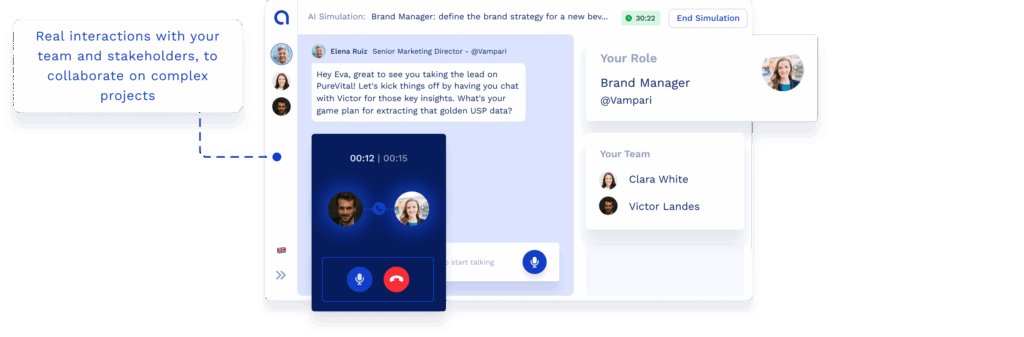
The outcome is not just a pass/fail signal. Anthropos provides structured insights into how employees communicate, prioritize, solve problems, make decisions, and even how they interact with AI tools. It’s a richer, more human picture—one that aligns with how people really work today.
From Data to Action: What Companies Can Actually Do with These Insights
The true value of workforce assessment lies in how it informs action. With the right data in hand, companies can identify skills gaps early, design personalized development paths, and make smarter decisions about mobility, reskilling, and succession.
For example, rather than relying on tenure or managerial intuition to determine who’s ready for a leadership role, companies using Anthropos can simulate the demands of that role and observe how a candidate performs.
Rather than guessing which team needs training on AI adoption, they can run targeted assessments and see exactly who is adapting well and who needs support.
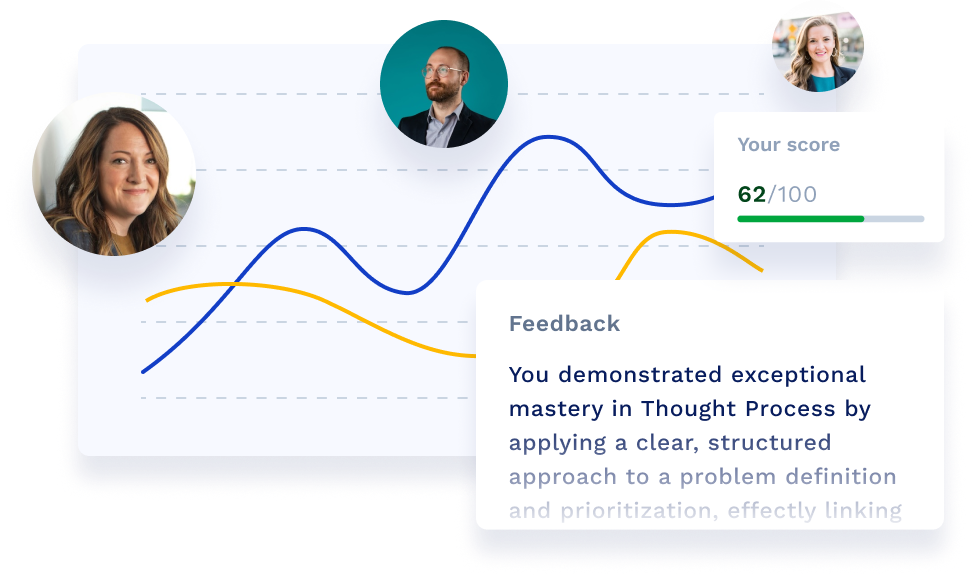
This isn’t just useful for L&D or HR—it becomes operationally relevant across departments. Sales leaders can understand which reps are ready to handle more strategic accounts. Engineering leads can see who’s prepared to take on cross-functional responsibilities. Product heads can spot talent ready to move into ownership roles.
And because Anthropos integrates with your existing workflows, this kind of assessment can happen at scale, without disrupting day-to-day operations.
The Strategic Use Cases in Workforce Assessment: Internal Mobility, Upskilling, and AI Readiness
Some of the most powerful uses of workforce assessment begin where traditional org charts leave off. When done right, assessment becomes the foundation for three strategic areas of talent management.
The first is internal mobility. In tight labor markets, the ability to move people into new roles is essential—but too often, companies either promote based on instinct or overlook promising talent entirely. Simulation-based assessment helps remove that guesswork. It gives both the company and the employee confidence that a move is the right one.
The second is workforce upskilling and reskilling. As job requirements evolve, blanket training programs often miss the mark. Anthropos allows teams to pinpoint the exact capabilities that are missing and to track progress in closing those gaps. Learning is no longer disconnected from performance—it’s embedded in the flow of work.
Finally, there’s AI readiness. With tools like ChatGPT, Copilot, and Claude becoming part of daily workflows, companies need to know not just whether people are aware of these tools—but how they’re using them. Anthropos simulations can include AI interactions, helping organizations evaluate how effectively someone prompts, validates, and applies AI output in their decision-making.
This is especially valuable because it lets companies define their own cultural and technical expectations. Some may want to see strong AI adoption; others may prioritize human review or domain judgment. Either way, the organization stays in control.
A New Standard for Seeing and Growing Talent
The companies that will thrive over the next five years aren’t just those with great hiring practices or attractive benefits. They’re the ones that know how to see their talent clearly and move them confidently into what’s next.
Workforce assessment—when done right—is the system behind that agility. It tells you not only who is performing, but who is ready. Not only where you have risks, but where you have untapped potential. And when powered by platforms like Anthropos, it stops being a static HR process and becomes an engine for business growth.
In an age of rapid change, companies don’t just need more people. They need more visibility, more adaptability, and more confidence in the decisions they make about talent.
Anthropos gives you all three.
It may also interest you

March 2, 2026
Most read about
Recent post
Related Posts
Organizations today operate in an environment where skills determine competitiveness more than ever before. Technology evolves quickly, customer expectations shift continuously, and new roles emerge faster than traditional job frameworks can keep up. In this context, companies are realizing that understanding what their workforce is truly capable of doing is no longer optional. This growing ...

Most organizations don’t realize they have a workforce capability problem until it begins to affect performance. A major project slows down because teams lack the right technical expertise. A new product launch struggles because customer-facing teams are not ready to handle complex conversations. A digital transformation initiative stalls because employees are unsure how to adopt ...

Artificial intelligence is not just changing the tools employees use. It is changing the very definition of work itself. Across industries, AI is accelerating tasks that once required hours of manual effort. Software developers can now write code with AI assistance. Marketing teams generate campaign ideas with large language models. Sales representatives rely on predictive ...