Most organizations don’t realize they have a workforce capability problem until it begins to affect performance.
A major project slows down because teams lack the right technical expertise. A new product launch struggles because customer-facing teams are not ready to handle complex conversations. A digital transformation initiative stalls because employees are unsure how to adopt new tools. In many cases, leadership only becomes aware of these issues when results start to decline.
This delayed visibility is costly. It leads to reactive hiring, rushed training programs, and lost opportunities. It can also erode employee confidence, as teams feel unprepared to meet expectations that were never clearly defined.
Strategic workforce assessment aims to change this dynamic. Instead of discovering skill gaps after they impact the business, organizations can identify capability risks early and take action before performance suffers.
TL;DR – What this article is about:
-
Many companies discover workforce skill gaps only after they start impacting performance, revenue, or transformation initiatives.
-
Strategic workforce assessment helps organizations identify capability risks early and align talent development with business goals.
-
Simulation-based approaches provide deeper insight into how employees actually perform in realistic work scenarios.
-
Platforms like Anthropos enable leaders to build skill maps, support internal mobility, and plan workforce strategy with greater confidence.
Moving Beyond Operational HR to Strategic Talent Insight
Workforce assessment has traditionally been treated as an operational HR activity. Annual performance reviews, competency frameworks, and employee surveys provided some structure for evaluating talent. While useful, these tools were rarely designed to support long-term strategic planning.
Today, the stakes are higher. Companies must continuously adapt to new technologies, evolving customer needs, and shifting market conditions. This requires a deeper understanding of what their workforce can realistically deliver—not just in theory, but in practice.
Strategic workforce assessment provides that understanding. It focuses on aligning workforce capabilities with business objectives, ensuring that teams are equipped to execute the organization’s strategy. This means assessing not only technical skills but also decision-making ability, adaptability, communication, and collaboration.
When leaders have a clear view of these capabilities, they can plan with greater confidence. They can anticipate where additional hiring is required, where internal talent can be developed, and where investments in learning will produce the greatest return.
Why Traditional Workforce Planning Tools Are No Longer Enough
Many organizations attempt to forecast talent needs using headcount plans or generic skills inventories. While these tools offer a high-level perspective, they often fail to capture the complexity of real work.
Skills inventories rely heavily on self-reporting or manager estimates. Headcount plans assume that roles remain stable over time. Performance reviews focus on past achievements rather than future readiness. As a result, workforce planning becomes disconnected from the realities of day-to-day operations.
This gap becomes especially visible during periods of rapid change. When new technologies are introduced or business models evolve, employees are expected to perform tasks that may not exist in current job descriptions. Traditional assessment methods struggle to evaluate workforce readiness for these emerging demands.
Organizations need more dynamic approaches that reflect how work actually happens. They need tools that allow them to observe performance in realistic scenarios and translate those observations into actionable insights.
A New Model: Simulation-Based Strategic Workforce Assessment
Simulation-based assessment represents a significant shift in how organizations evaluate workforce capabilities. Rather than relying on static indicators, it enables companies to observe employees as they engage in scenarios that mirror real responsibilities.
Anthropos was built to support this model.
Through AI-powered job simulations, organizations can recreate the types of challenges employees encounter in their roles. Participants may need to prioritize competing initiatives, respond to complex customer requests, collaborate with cross-functional stakeholders, or use AI tools to complete a task.
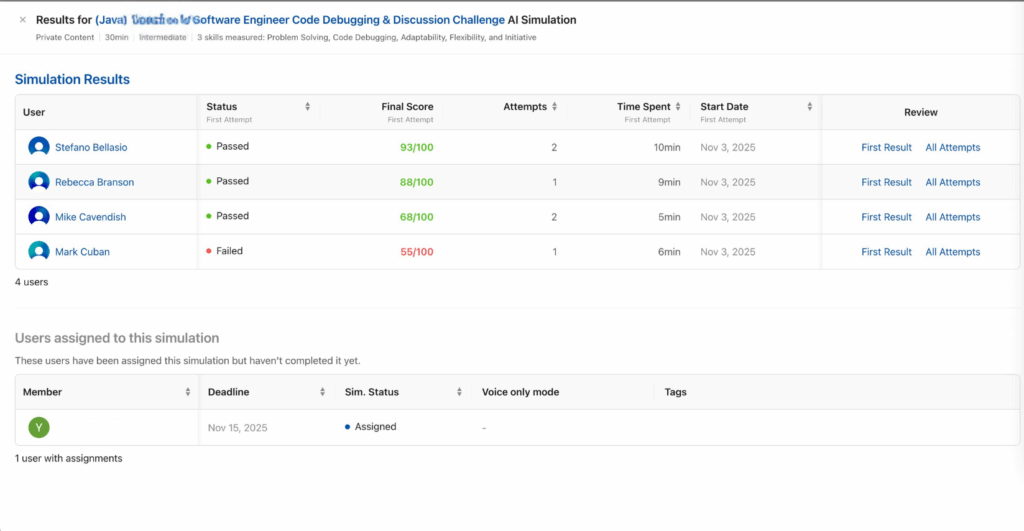
These experiences generate structured data about how individuals think, communicate, and make decisions. Leaders gain visibility into strengths that might otherwise remain hidden, as well as gaps that could limit future performance.
This level of insight transforms workforce assessment from a periodic exercise into a continuous strategic capability. Instead of reacting to performance issues after they occur, companies can anticipate them and adjust their talent strategies accordingly.
Turning Workforce Insights Into Strategic Decisions
The true value of strategic workforce assessment lies in how it informs action.
When organizations understand where skill gaps exist, they can design targeted development programs rather than broad, unfocused training initiatives. When they identify employees who demonstrate readiness for new responsibilities, they can accelerate internal mobility and reduce reliance on external hiring. When they recognize capability risks within critical teams, they can intervene before those risks translate into missed targets or delayed projects.
Anthropos supports these decisions by organizing assessment results into skill maps that provide a clear view of workforce capabilities across teams and functions. These maps help leaders see patterns that are difficult to detect through isolated performance metrics.
For example, an organization may discover that its product teams are strong in technical execution but lack strategic prioritization skills. Or that its sales teams excel in relationship building but struggle with data-driven decision-making. With this clarity, leadership can align development investments with the areas that will have the greatest business impact.
Preparing the Workforce for Transformation
Strategic workforce assessment is particularly important during periods of transformation.
Whether companies are adopting AI technologies, expanding into new markets, or restructuring their operations, success depends on the readiness of their people. Without reliable insight into workforce capabilities, transformation initiatives often rely on assumptions that prove inaccurate.
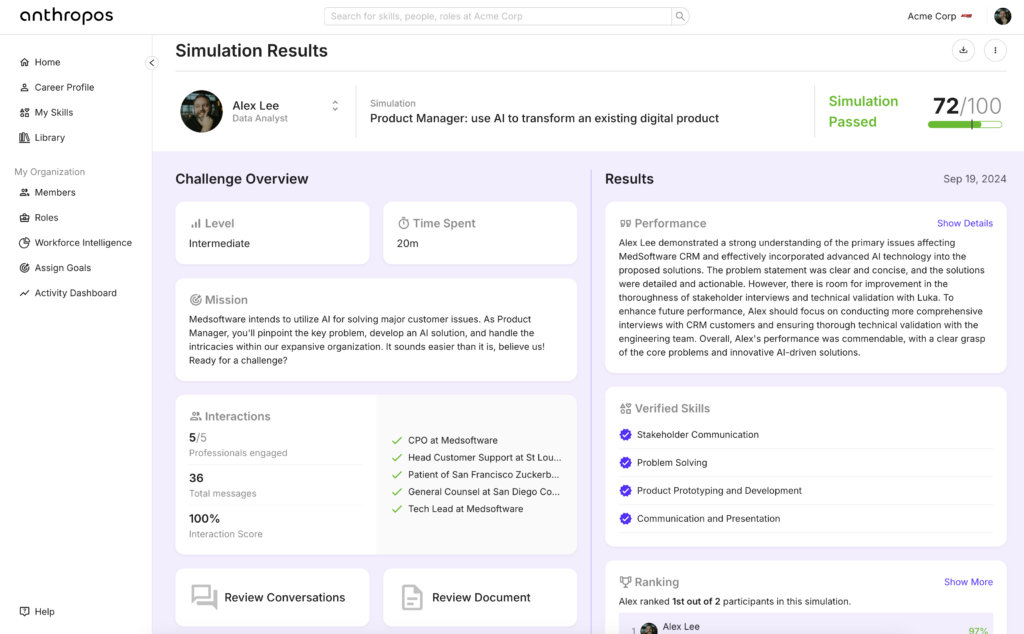
Simulation-based assessment provides a more grounded perspective. It allows organizations to test how employees respond to unfamiliar challenges and to measure how quickly they adapt. This helps leaders determine whether existing talent can support strategic goals or whether new capabilities must be introduced.
Over time, this approach fosters a culture of continuous development. Employees understand that growth is tied to demonstrated capability rather than static credentials. Leaders gain confidence that their workforce planning decisions are supported by real evidence.
Building a Proactive Talent Strategy
In an increasingly complex business environment, organizations cannot afford to treat workforce assessment as a retrospective exercise. They need proactive strategies that help them anticipate change and allocate talent effectively.
Strategic workforce assessment provides the foundation for this shift. By combining realistic simulations with structured performance insights, platforms like Anthropos enable companies to move from reactive problem-solving to forward-looking talent management.
This capability allows organizations to identify skill gaps before they affect results, to mobilize internal talent with confidence, and to align workforce development with long-term business objectives.
As the pace of change continues to accelerate, the ability to see workforce readiness clearly will become one of the defining advantages of high-performing companies. Those that invest in strategic assessment today will be better prepared to navigate the challenges—and opportunities—of tomorrow.
FAQ – Strategic Workforce Assessment
What is strategic workforce assessment?
Strategic workforce assessment is the process of evaluating employee capabilities to ensure they align with current and future business objectives. It goes beyond performance reviews by focusing on readiness, potential, and the ability to adapt to new challenges.
Why is strategic workforce assessment important for business performance?
Without clear visibility into workforce capabilities, organizations risk skill shortages that can delay projects, reduce productivity, and slow transformation efforts. Strategic assessment helps identify these gaps early and supports better planning.
How does strategic workforce assessment differ from traditional performance evaluation?
Traditional performance evaluations typically focus on past results and individual goals. Strategic workforce assessment looks forward, evaluating how employees can contribute to evolving roles, technologies, and business priorities.
How can companies identify workforce skill gaps effectively?
Organizations can identify skill gaps by observing how employees perform in realistic job scenarios, analyzing structured capability data, and mapping strengths and development areas across teams and functions.
How does Anthropos support strategic workforce assessment?
Anthropos enables companies to run AI-powered simulations that replicate real work challenges. These simulations generate structured insights into skills, behaviors, and decision-making, helping leaders make informed decisions about hiring, upskilling, and internal mobility.

March 12, 2026
Most read about
Recent post
Related Posts
Organizations today operate in an environment where skills determine competitiveness more than ever before. Technology evolves quickly, customer expectations shift continuously, and new roles emerge faster than traditional job frameworks can keep up. In this context, companies are realizing that understanding what their workforce is truly capable of doing is no longer optional. This growing ...

Artificial intelligence is not just changing the tools employees use. It is changing the very definition of work itself. Across industries, AI is accelerating tasks that once required hours of manual effort. Software developers can now write code with AI assistance. Marketing teams generate campaign ideas with large language models. Sales representatives rely on predictive ...
Many organizations today face the same uncomfortable question: are our teams actually ready for what’s coming next? Markets are changing quickly. Artificial intelligence is transforming workflows. Customer expectations evolve constantly, and new tools appear faster than teams can adopt them. In this environment, simply having talented people on staff is not enough. What matters is ...