
AI Engineer Hiring Guide

Why Hiring an AI Engineer

As companies across industries begin integrating artificial intelligence into their products, operations, and customer experiences, the need for engineers who can build, train, and deploy AI systems has become critical.

AI engineers bring together deep technical expertise in machine learning, data engineering, and software development. Their work spans a wide range of areas: from building recommendation engines to implementing computer vision models, or optimizing NLP pipelines that power real-time chatbots and search. In a world increasingly shaped by data and automation, these are the professionals who can turn ambitious ideas into working, intelligent systems.

But AI talent is hard to find and even harder to evaluate. The role requires a rare mix of theoretical knowledge, hands-on coding ability, and real-world problem-solving. Whether you’re a CTO building out an AI product, a Head of Data looking to scale your team, or an HR manager tasked with finding top technical talent — getting the right person in this role means the difference between breakthrough impact and costly experimentation.

TASKS OF AN AI ENGINEER

  • 1. Design and train machine learning models
    Develop supervised or unsupervised models tailored to specific use cases, optimizing for accuracy, performance, and generalization.

  • 2. Build and maintain data pipelines
    Collect, clean, and preprocess large datasets to ensure reliable input for model training and validation.

  • 3. Deploy models into production environments
    Integrate trained models into applications or platforms, managing versioning, testing, and performance monitoring.

  • 4. Evaluate model performance and iterate
    Use statistical methods and live feedback to assess results, refine parameters, and improve outcomes over time.

  • 5. Collaborate with engineering and product teams
    Work closely with software engineers, designers, and product leads to align AI solutions with business needs and product goals.

  • 6. Stay updated on tools and frameworks
    Keep up with the fast-moving AI ecosystem — from new LLMs and open-source libraries to advances in architecture and deployment best practices.

Key Skills and Qualifications of an AI Engineer

Hiring an AI Engineer means identifying talent that can operate across disciplines — combining software engineering, data science, and machine learning expertise. While AI roles can differ in focus (from applied machine learning to MLOps or research-heavy roles), there are core capabilities that consistently signal readiness to perform in real-world environments. Here are six essential skills and qualifications to look for when hiring an AI Engineer:

Machine Learning and Deep Learning Fundamentals:

A strong grasp of supervised and unsupervised learning, model training, validation, and evaluation techniques — plus experience with deep learning architectures like CNNs, RNNs, and transformers.

Programming with Python and ML Libraries:

Proficiency in Python is a must, along with hands-on experience using libraries like Scikit-learn, PyTorch, TensorFlow, or Keras to build, train, and deploy models.

Data Handling and Feature Engineering:

Ability to work with large datasets using tools like Pandas and NumPy, with the skills to clean, transform, and engineer features that improve model accuracy and relevance.

Deployment and MLOps Awareness:

Understanding of how to deploy models into production using APIs, containers (Docker), and model lifecycle tools like MLflow or SageMaker — especially in environments requiring scalability and monitoring.

Applied Math and Statistical Reasoning:

Working knowledge of linear algebra, probability, statistics, and optimization techniques used to tune models, interpret outputs, and address bias or variance problems.

Communication and Collaboration:

The ability to explain complex models to non-technical teams, present findings clearly, and work across disciplines — especially with product teams, data engineers, and business stakeholders.

Common Challenges in Hiring 
an AI Engineer

The growing demand for AI engineers has created a crowded hiring landscape — and the complexity of the role makes it hard to evaluate candidates with traditional methods. From verifying skills to spotting real-world readiness, companies face several recurring challenges when trying to make the right hire.
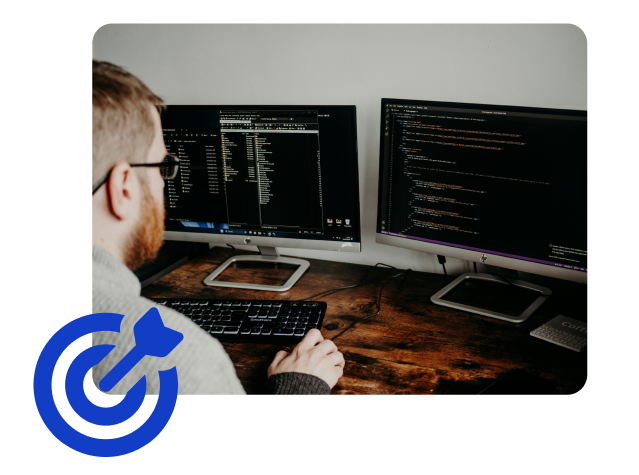
Some of the biggest challenges in AI engineer recruitment include:

Hard to validate real-world AI skills: Many candidates can describe ML concepts or list the right tools, but that doesn’t guarantee they can apply them effectively in production environments.

Gaps between academic knowledge and applied work: Candidates with research backgrounds may lack the speed, adaptability, or pragmatism needed to deliver working solutions in product-driven teams.

Fragmented technical skill sets: AI engineers often specialize in modeling, data, or infrastructure — but rarely all three. It’s difficult to find someone who can manage the full pipeline autonomously.

Outdated or misaligned hiring processes: Standard coding tests or theoretical interviews don’t assess AI-specific reasoning or workflows, leaving hiring teams guessing how someone will perform on the job.

 Scarcity of high-quality candidates: With demand far exceeding supply, even attracting qualified applicants can be a challenge — especially when you’re competing with well-known tech employers.

Understanding these challenges can help your company build a more strategic, efficient, and successful AI engineer hiring process.

AI Engineer Step-by-Step Hiring Process

1.

Role Definition and Skill Mapping

Start by clearly outlining what kind of AI work the role will involve — from NLP and computer vision to MLOps or data pipeline ownership — and identify the skills that matter most for your environment.Start by clearly outlining what kind of AI work the role will involve — from NLP and computer vision to MLOps or data pipeline ownership — and identify the skills that matter most for your environment.

2.

Sourcing and Screening

Use targeted outreach, referrals, and talent platforms to source candidates with a proven track record or strong project portfolios. Screen for key technical experiences and alignment with your tech stack and use cases.

3.

Skills Assessment

Instead of relying on generic tests, use practical assessments or simulations to evaluate how candidates approach real-world challenges — including model selection, coding ability, and cross-functional communication.

4.

Technical and Stakeholder Interviews

Involve both engineering and product stakeholders in structured interviews to understand how the candidate solves problems, explains trade-offs, and collaborates with others.

AI Simulations to hire an AI Engineer

Anthropos AI Simulations help you evaluate candidates in real-world conditions before making the hire. Each simulation mirrors the tasks, challenges, and decisions typical of the role you’re hiring for — giving you real signals, not assumptions. Instead of resumes or generic tests, you see how people actually think, build, and collaborate. Below is a selection of simulations best suited for this position.

Discover all the AI ​​Engineers hiring simulations:

Hiring guides for similar roles: