
Backend Developer Hiring Guide

Why Hiring a Backend Developer

If the front-end is what users see, the back-end is what makes everything work. Backend developers build the invisible systems that power your product’s logic, performance, data integrity, and scalability. As products become more complex and data-heavy, the need for robust, scalable, and secure backend systems becomes mission-critical.

Hiring the right backend developer is not just about writing APIs or storing data. It’s about designing architecture that scales, handling business logic with precision, and ensuring that everything runs smoothly across environments. A great backend engineer can dramatically reduce tech debt and ensure your systems grow with your product. A poor one can introduce inefficiencies, bottlenecks, and long-term instability.
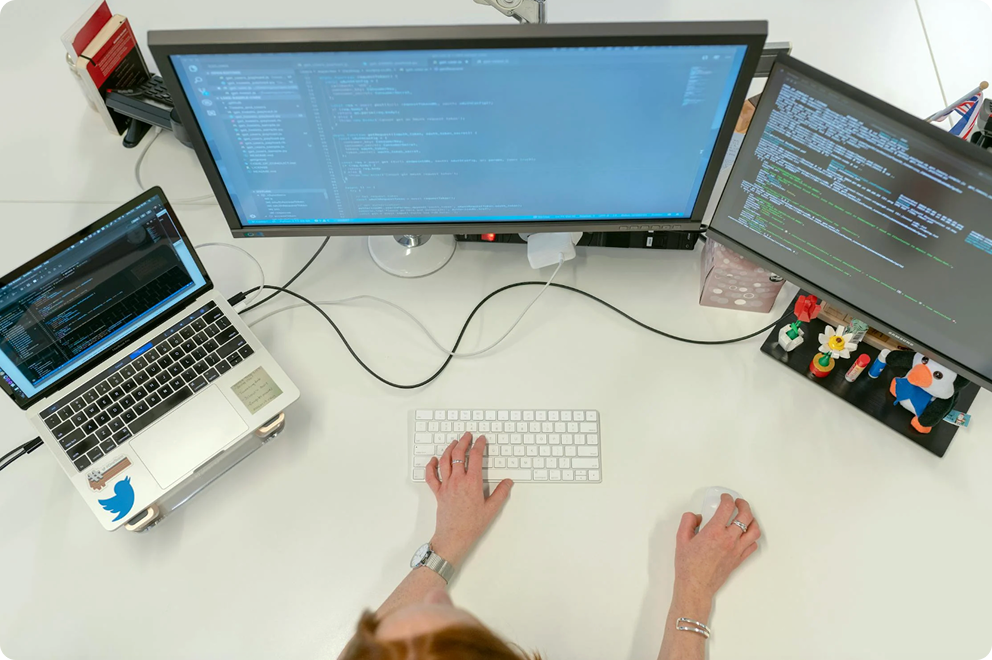
hire backend developer

TASKS OF A BACKEND DEVELOPER

  • 1. Designing and building APIs
    Develop RESTful or GraphQL APIs that front-end systems and third-party services rely on to access and modify data.

  • 2. Managing databases and data models
    Design schemas, write queries, and optimize database performance using systems like PostgreSQL, MySQL, or MongoDB.

  • 3. Implementing business logic and services
    Translate complex requirements into backend services that encapsulate core product rules and workflows.

  • 4. Ensuring scalability and performance
    Use caching, asynchronous processing, and infrastructure-aware code to make sure the system performs under load.

  • 5. Securing systems and user data
    Implement authentication, authorization, encryption, and data validation best practices to protect the application.

  • 6. Writing tests and CI pipelines
    Automate testing and deployment to ensure backend services are reliable, versioned, and monitored in production.

Key Skills and Qualifications of a Backend Developer

Hiring a Backend Developer means identifying engineers who combine software architecture skills with database expertise and infrastructure knowledge. While backend roles can vary in scope (API development, database administration, microservices architecture), there are core capabilities that consistently signal readiness to build production systems. Here are six essential skills and qualifications to look for when hiring a Backend Developer:

Proficiency in backend programming languages:

Strong command of Python, Node.js, Java, Go, Ruby or similar, depending on the stack. Understanding of best practices in each language.

Database design and optimization:

Ability to work with both relational and non-relational databases, optimize queries, and manage schema migrations.

API architecture and integration:

Comfort with designing, documenting, and securing APIs that handle internal and external communication.

Cloud infrastructure and DevOps familiarity:

Working knowledge of containers (Docker), CI/CD pipelines, and cloud platforms like AWS, GCP, or Azure.

Performance profiling and debugging:

Experience using logging, metrics, and observability tools to troubleshoot and improve live systems.

Collaboration with product and cross-functional teams:

Ability to work across teams, explain system behavior, and make technical trade-offs in fast-moving environments.

Common Challenges in Hiring
a Backend Developer

Hiring backend engineers is increasingly competitive as more companies build complex distributed systems. The role demands a rare combination of architectural thinking, systems knowledge, and practical coding ability. Traditional hiring methods often miss critical signals about a candidate’s ability to build scalable, maintainable production systems.
backend developer hiring guide

Some of the biggest challenges in backend developer recruitment include:

Hard to validate real-world AI skills: Many candidates can describe ML concepts or list the right tools, but that doesn’t guarantee they can apply them effectively in production environments.

Gaps between academic knowledge and applied work: Candidates with research backgrounds may lack the speed, adaptability, or pragmatism needed to deliver working solutions in product-driven teams.

Fragmented technical skill sets: AI engineers often specialize in modeling, data, or infrastructure — but rarely all three. It’s difficult to find someone who can manage the full pipeline autonomously.

Outdated or misaligned hiring processes: Standard coding tests or theoretical interviews don’t assess AI-specific reasoning or workflows, leaving hiring teams guessing how someone will perform on the job.

 Scarcity of high-quality candidates: With demand far exceeding supply, even attracting qualified applicants can be a challenge — especially when you’re competing with well-known tech employers.

Understanding these challenges can help your company build a more strategic, efficient, and successful backend developer hiring process.

Backend Developer Step-by-Step Hiring Process

1.

Role Definition and Skill Mapping

Start by clearly outlining what kind of AI work the role will involve — from NLP and computer vision to MLOps or data pipeline ownership — and identify the skills that matter most for your environment.Start by clearly outlining what kind of AI work the role will involve — from NLP and computer vision to MLOps or data pipeline ownership — and identify the skills that matter most for your environment.

2.

Sourcing and Screening

Use targeted outreach, referrals, and talent platforms to source candidates with a proven track record or strong project portfolios. Screen for key technical experiences and alignment with your tech stack and use cases.

3.

Skills Assessment

Instead of relying on generic tests, use practical assessments or simulations to evaluate how candidates approach real-world challenges — including model selection, coding ability, and cross-functional communication.

4.

Technical and Stakeholder Interviews

Involve both engineering and product stakeholders in structured interviews to understand how the candidate solves problems, explains trade-offs, and collaborates with others.

AI Simulations to hire a Backend Developer

Anthropos AI Simulations help you evaluate candidates in real-world conditions before making the hire. Each simulation mirrors the tasks, challenges, and decisions typical of the role you’re hiring for — giving you real signals, not assumptions. Instead of resumes or generic tests, you see how people actually think, build, and collaborate. Below is a selection of simulations best suited for this position.

The best AI Simulations to hire a Backend Developer: