
Software Engineer Hiring Guide

Why Hiring a Software Engineer

Hiring a software engineer isn’t just about filling a technical seat. It’s about choosing someone who will directly influence how your product is built, how your systems scale, and how your teams collaborate. Software engineers play a critical role in shaping the performance, stability, and future evolution of your digital infrastructure. The challenge is that technical resumes often fail to tell the full story. Many candidates can list the right programming languages or projects, but that doesn’t guarantee they can deliver in your team’s context. Worse, traditional coding interviews and take-home challenges often miss key abilities like communicating decisions, working across functions, or dealing with ambiguity. In today’s AI-assisted development landscape, hiring the right engineer means assessing not just what they know – but how they work. It means understanding how they approach design decisions, how they collaborate, and how they think about software in real-world settings. That’s why a better hiring process is needed – one that brings their problem-solving, technical execution, and team readiness into clear view before you make the offer.
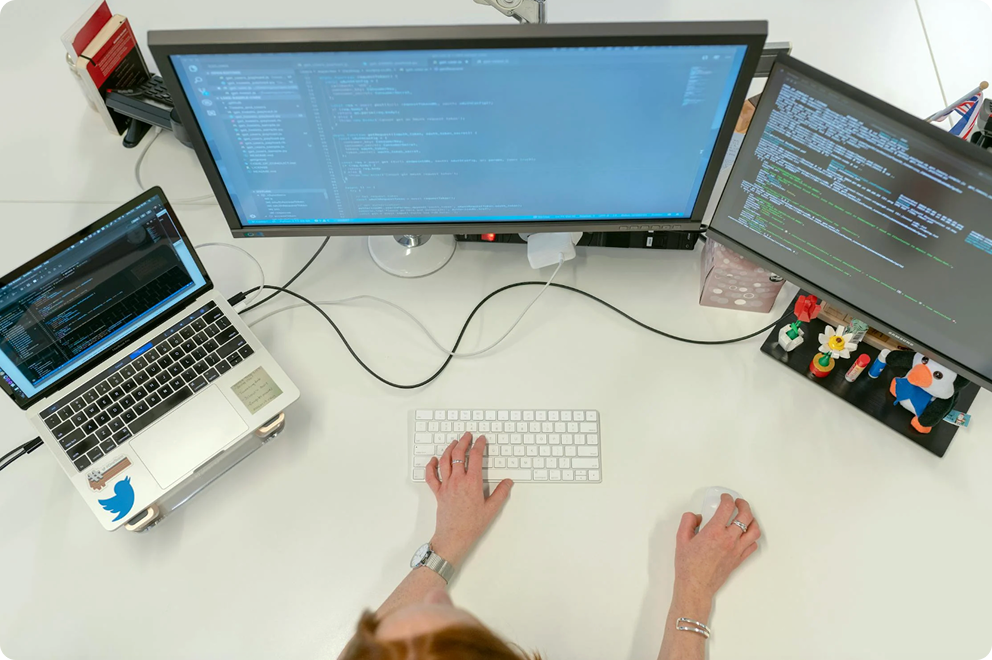
hire software engineer

TASKS OF A SOFTWARE ENGINEER

  • 1. Design and build scalable software systems
    Software engineers are responsible for translating requirements into robust, maintainable codebases that support business goals at scale.

  • 2. Collaborate across product, design, and engineering teams
    They contribute to cross-functional planning, ensuring technical feasibility and alignment with product strategy.

  • 3. Review and maintain code quality
    Engineers review peer code, follow standards, and contribute to high-quality, maintainable systems that evolve over time.

  • 4. Debug, test, and optimize applications
    They identify bottlenecks, fix bugs, and implement tests to ensure stability, performance, and continuous improvement.

  • 5. Contribute to architecture and system design
    Senior engineers in particular help shape the broader system architecture, making long-term decisions about technologies and frameworks.

  • 6. Stay up to date with tools and best practices
    Keep up with the fast-moving AI ecosystem — from new LLMs and open-source libraries to advances in architecture and deployment best practices.

Key Skills and Qualifications of a Software Engineer

Hiring a software engineer means finding someone who can write quality code, collaborate across teams, and deliver reliable systems — The best candidates combine strong technical fundamentals with communication skills and adaptability. Here are six essential skills and qualifications to look for when hiring a Software Engineer:

Strong programming fundamentals:

A strong grasp of supervised and unsupervised learning, model training, validation, and evaluation techniques — plus experience with deep learning architectures like CNNs, RNNs, and transformers.

Programming with Python and ML Libraries:

Proficiency in Python is a must, along with hands-on experience using libraries like Scikit-learn, PyTorch, TensorFlow, or Keras to build, train, and deploy models.

Data Handling and Feature Engineering:

Ability to work with large datasets using tools like Pandas and NumPy, with the skills to clean, transform, and engineer features that improve model accuracy and relevance.

Deployment and MLOps Awareness:

Understanding of how to deploy models into production using APIs, containers (Docker), and model lifecycle tools like MLflow or SageMaker — especially in environments requiring scalability and monitoring.

Applied Math and Statistical Reasoning:

Working knowledge of linear algebra, probability, statistics, and optimization techniques used to tune models, interpret outputs, and address bias or variance problems.

Communication and Collaboration:

The ability to explain complex models to non-technical teams, present findings clearly, and work across disciplines — especially with product teams, data engineers, and business stakeholders.

Common Challenges in Hiring
a Software Engineer

The demand for skilled software engineers continues to outpace supply, and traditional hiring methods often fail to identify the right candidates — Technical interviews can be gamed, resumes are incomplete pictures, and take-home tests don’t reflect real teamwork. Companies end up making expensive hiring mistakes because they lack visibility into how candidates truly work.

software engineer hiring guide

Some of the biggest challenges in software engineer recruitment include:

Traditional interviews don’t reflect real-world work: Live coding sessions or algorithm tests don’t show how someone writes production-grade code or collaborates on a real feature.

Candidates are using AI to pass assessments: With tools like ChatGPT, many can ace take-home assignments – without revealing how they work or think independently.

Fragmented technical skill sets: Engineers may specialize in frontend, backend, or infrastructure — but rarely all three. It’s difficult to find someone who can manage the full pipeline autonomously.

Outdated or misaligned hiring processes: Standard coding tests or theoretical interviews don’t assess AI-specific reasoning or workflows, leaving hiring teams guessing how someone will perform on the job.

 Scarcity of high-quality candidates: With demand far exceeding supply, even attracting qualified applicants can be a challenge — especially when you’re competing with well-known tech employers.

Understanding these challenges can help your company build a more strategic, efficient, and successful software engineer hiring process.

Software Engineer Step-by-Step Hiring Process

1.

Align the role to real technical needs

Start by clearly outlining what kind of AI work the role will involve — from NLP and computer vision to MLOps or data pipeline ownership — and identify the skills that matter most for your environment.Start by clearly outlining what kind of AI work the role will involve — from NLP and computer vision to MLOps or data pipeline ownership — and identify the skills that matter most for your environment.

2.

Screen for core coding skills and systems thinking

Use automated challenges or simulations to verify their ability to write clean, maintainable code and reason through real-world scenarios.

3.

Test how they work – not just what they know

Instead of relying on generic tests, use practical assessments or simulations to evaluate how candidates approach real-world challenges — including model selection, coding ability, and cross-functional communication.

4.

Assess collaboration and communication skills

Ensure they can explain their code, justify trade-offs, and interact effectively with teammates, designers, and PMs.

AI Simulations to hire a Software Engineer

Anthropos AI Simulations allow you to assess software engineers in the exact scenarios they’ll face on the job. From designing systems to explaining technical decisions, simulations create a complete picture of each candidate’s strengths – before you hire. In a typical simulation, a candidate might be asked to build or refactor part of a web application using your tech stack. They’ll navigate competing requirements, respond to unexpected changes, and even handle communication with simulated designers or PMs. Anthropos allows you to see how they reason, prioritize, and build – with full transparency into their code quality, architectural decisions, and collaboration style.

Most importantly, Anthropos captures soft skills that live interviews often miss. Engineers interact with virtual stakeholders, explain decisions in writing or speech, and respond to real-world ambiguity. And the platform can detect and report on any use of AI tools like ChatGPT, giving you full visibility into whether their work is independent or assisted. Anthropos is the only assessment platform that reflects the full complexity of modern engineering work – not just how someone writes code, but how they contribute to the team and product in real life.

The best AI Simulations and Skill Paths to hire a Software Engineer:

Useful content to hire & assess software engineer candidates: